Salads
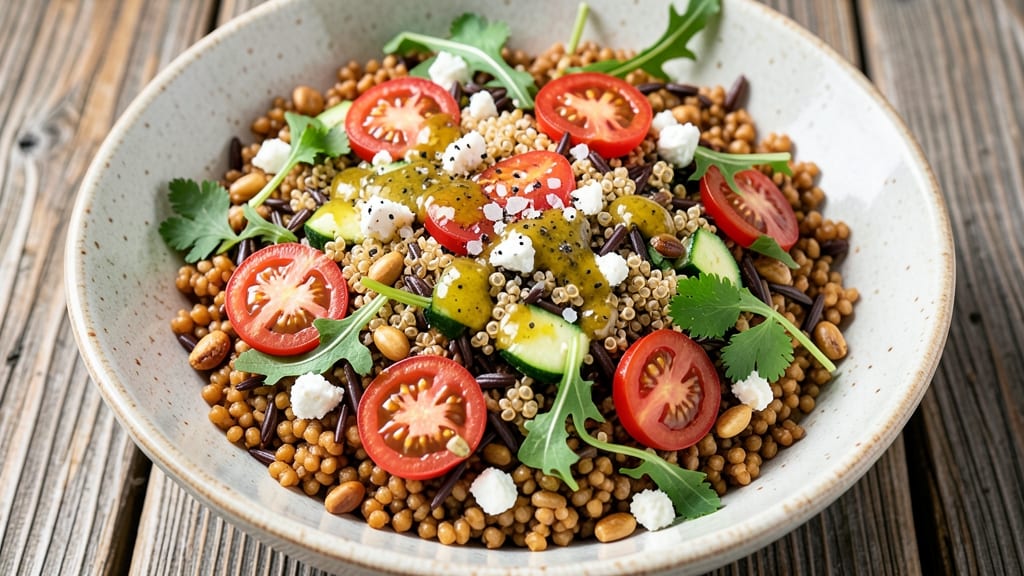
This 7 grain salad recipe transforms simple grains into a nutrient-packed powerhouse with textures that range from chewy bulgur to crispy toasted seeds. The key lies in balancing earthy grains, fresh herbs, and a bright dressing that ties everything together without overpowering the natural flavors.
I developed this recipe after realizing how often grocery store versions relied on processed dressings and lacked the depth of homemade preparation.
The beauty of this salad is its versatility—it works as a standalone vegetarian main dish or pairs perfectly with grilled proteins, fish, or roasted vegetables. Each grain (farro, quinoa, barley, millet, and more) brings unique texture and nutritional benefits, creating a fiber-rich, protein-dense meal that keeps you satisfied.
The secret to success is toasting the grains lightly before assembly, which enhances their natural nuttiness and prevents a mushy texture.
What you'll end up with is a colorful, crunchy, herb-infused salad that's as beautiful as it is delicious. The combination of warm grains, fresh vegetables, and a tangy dressing creates a perfect balance of flavors and textures—chewy grains, crisp vegetables, and creamy toppings.
This salad is perfect for meal prep, potlucks, or a hearty lunch that feels special without being complicated.
Whether you're looking for a nutrient-dense vegetarian meal or a side dish that steals the show, this 7 grain salad delivers. The best part? It keeps well in the fridge for up to 5 days, making it an ideal make-ahead option for busy weeks.
Let's get started on creating this flavor fusion!
Ingredients for 7 grain salad
Seven grains, two crunchy seeds, and a dressing that brings it all together—this is your flavor fusion starter kit.
| Ingredient | Amount | Notes |
|---|---|---|
| Farro Grains 🌾 | ¾ cup | Uncooked, rinsed thoroughly |
| Quinoa 🌾 | ½ cup | Rinsed well to remove bitterness |
| Barley 🌾 | ½ cup | Pearl or hulled variety |
| Millet 🌾 | ¼ cup | Lightly toasted for nuttiness |
| Bulgur Wheat 🌾 | ¼ cup | Fine grind for quick cooking |
| Wild Rice Blend 🌾 | ¼ cup | Uncooked, for chewy texture |
| Sunflower Seeds 🥜 | ¼ cup | Toasted for crunch |
| Pumpkin Seeds 🥜 | ¼ cup | Toasted for extra crunch |
| Fresh Parsley 🌿 | ¼ cup | Chopped, flat-leaf preferred |
| Fresh Dill 🌿 | ¼ cup | Chopped, for bright flavor |
| Red Bell Pepper 🍅 | 1 whole | Diced, vibrant color |
| Cucumber 🥒 | 1 whole | Seedless, diced |
| Red Onion 🧅 | ½ whole | Thinly sliced, sharp flavor |
| Extra-Virgin Olive Oil 🫒 | ½ cup | High quality, fruity |
| Apple Cider Vinegar 🍏 | 2 tbsp | Raw, unfiltered preferred |
| Maple Syrup 🍁 | 1 tbsp | Pure, for subtle sweetness |
| Dijon Mustard 🍯 | 1 tsp | For tangy depth |
| Salt 🧂 | 1 tsp | Diamond Crystal preferred |
| Black Pepper 🌶️ | ½ tsp | Freshly ground |
The grains are the heart of this salad, so buy them pre-packaged from a bulk section—Trader Joe's has a great mix, but Whole Foods carries individual bags if you want to customize. Farro and wild rice need the most time to cook, so plan ahead. Toast the grains lightly in olive oil before cooking—this enhances their natural nuttiness and prevents mushiness. For the seeds, Costco's bulk bins offer the best price, but any grocery store will have them. Look for seeds that smell fresh and aren't rancid—if they smell like nothing, toss them. The herbs? Fresh is non-negotiable here—dried just won't cut it for that bright, fresh flavor.
No farro? Substitute with brown rice or couscous—just adjust cooking time. Short on quinoa? Buckwheat works beautifully. For the dressing, balsamic vinegar can replace apple cider vinegar if that's what you've got, but the apple cider adds a subtle sweetness that's worth hunting down. The seeds are non-negotiable for crunch, but if you're avoiding nuts, toasted chickpeas or croutons add a similar texture. For the veggies, any colorful bell pepper works—yellow or orange add different flavor notes. And if you're making this ahead, store the grains and veggies separately until assembly to keep everything crisp.
This salad tastes even better the next day—5 days max in the fridge, sealed tightly. The grains stay chewy, and the flavors meld beautifully. For meal prep, portion into glass containers—they keep the salad fresher longer. If you're taking it to a potluck, pack the grains and dressing separately and mix just before serving to maintain that fresh crunch. The seeds and herbs? Add them right before serving so they don't get soggy. And trust me, leftovers are even better—the flavors develop and deepen overnight.
Why You'll Love This Recipe
- Here’s what sold me: the texture contrast. Farro’s hearty bite, quinoa’s slight crunch, and millet’s creamy center? It’s like a grain orchestra. Toss in toasted pine nuts or sunflower seeds, and suddenly you’ve got a salad that demands seconds—no sad, mushy grains here.
- I’ll be real: this recipe saved me during that month I swore off takeout. All those grains? Cheaper than buying pre-made salads, and they last forever in the fridge. Double the batch, freeze half, and boom—next week’s dinner is already handled. No more last-minute grocery runs for sad lettuce.
Step-by-step instructions for the ultimate 7 grain salad
This hearty grain medley delivers perfect texture and flavor—crispy seeds meet tender grains in a vibrant herb dressing.
Cook the Grains Individually for Perfect Texture
Start by cooking each grain separately to ensure they reach ideal doneness. Bring 3 cups of water to a boil in a saucepan and add the 0.75 cup farro grains and 0.5 cup quinoa together. Reduce heat to low, cover, and simmer for 25-30 minutes until the farro is tender and the quinoa fluffs easily. Drain well and set aside.
In a separate pot, cook the 0.5 cup barley in 2 cups fresh water for 45-50 minutes until chewy but not mushy. For the 0.25 cup bulgur wheat, simply cover it with 1 cup boiling water and let it sit for 15 minutes—it absorbs liquid without cooking. The 0.25 cup wild rice blend needs 45 minutes in 2 cups water to achieve its signature chew.
Toast the 0.25 cup millet in a dry skillet over medium heat for 3-4 minutes until fragrant, then cover with 1 cup water and simmer for 15 minutes. The key here is patience—each grain has its own cooking time, and rushing will result in uneven textures.
Prepare the Crunchy Seed and Vegetable Base
While the grains cook, toast the 0.25 cup sunflower seeds and 0.25 cup pumpkin seeds in a dry skillet over medium heat for 4-5 minutes, stirring constantly until golden and fragrant. Spread them on a plate to cool—they'll crisp up further as they cool, adding that essential crunch to the salad.
Dice the 1 whole red bell pepper into ¼-inch pieces and the 1 whole cucumber into ½-inch cubes. Thinly slice the 0.5 whole red onion and place it in a bowl of ice water for 5 minutes to mellow its sharpness. Drain before adding to the salad.
Chop the 0.25 cup fresh parsley and 0.25 cup fresh dill finely—this ensures they distribute evenly and maintain their bright color. The herbs are the finishing touch that makes this salad truly vibrant and fresh.
Assemble the Grain Medley
In a large mixing bowl, combine all the cooked grains, toasted seeds, diced vegetables, and chopped herbs. Gently fold everything together with a wooden spoon—you want to maintain individual textures while ensuring even distribution. Taste a spoonful at this stage; the grains should be warm and the vegetables crisp.
Here's the thing—don't overmix. The grains should still have some bite, and the vegetables should retain their crunch. If you're serving this immediately, proceed to dressing. If you're prepping ahead, refrigerate the grain mixture uncovered for 30 minutes to let any excess moisture evaporate—this prevents a soggy salad later.
Whisk the Herb-Infused Dressing
In a small bowl, whisk together the 0.5 cup extra-virgin olive oil, 2 tbsp apple cider vinegar, 1 tbsp maple syrup, 1 tsp Dijon mustard, 1 tsp salt, and 0.5 tsp black pepper. The dressing should be emulsified but still pourable—if it separates, whisk in 1-2 tsp water to loosen it.
Taste and adjust seasoning—you want a balance of tangy, sweet, and savory. The dressing should coat the back of a spoon but not be overly thick. Real talk: this is where the magic happens. The herbs in the salad will infuse into the dressing as it sits, so don't be shy with the fresh dill and parsley in the grain mixture.
Toss and Serve with Confidence
Just before serving, drizzle the dressing over the grain mixture and toss gently to coat evenly. The salad should glisten slightly from the olive oil but not appear greasy. Let it sit for 5-10 minutes before serving to allow the flavors to meld—this is especially important if you're making it ahead.
Serve immediately while the grains are still warm and the vegetables retain their crunch. This salad holds up beautifully for 2-3 days in the refrigerator, but the texture will soften slightly over time. For best results, store the grains and vegetables separately from the dressing until ready to serve.
Pro Tips For Making 7 Grain Salad
- COOK GRAINS SEPARATELY: I learned this the hard way—trying to mix all seven grains in one pot leads to uneven texture. Farro and barley need 30-35 minutes, while millet and quinoa are done in 15-20. Cook them in batches unless you enjoy mushy bulgur and undercooked quinoa.
- RINSE QUINOA AND BARLEY: This isn’t just a health thing—it removes the bitter starch coating that makes quinoa taste like birdseed and keeps barley from turning gummy. A quick cold-water rinse (30 seconds, drain) makes a real difference, especially for the quinoa.
- DON’T SKIP THE TOAST: A quick dry-toast in a hot pan for 2-3 minutes before adding liquid gives farro and barley that nutty depth you see in fancy salads. Skip it, and you’re left with bland, pasty grains—no one wants that.
- USE A MIXED-NUT FINISH: Instead of just tossing with dressing, fold in a handful of toasted nuts (walnuts or almonds work best) right before serving. They add crunch, balance the chewiness of farro, and cut through the earthiness of millet—plus, they’re the first thing people notice.
Common mistakes when making this dish
Uneven Grain Cooking
Cooking all grains together is a rookie mistake—they all need different times and water ratios. Farro takes 25-30 minutes while barley needs 45-50 minutes. I've ruined salads by combining them, so cook each grain separately.
Use a separate pot for barley and wild rice—they require more water and longer simmering. 🌡️
Skipping the Toast
Never skip toasting the grains or seeds! Toasting the 0.25 cup millet for 3-4 minutes before cooking and the 0.5 cup seeds for 4-5 minutes adds crucial nuttiness and crunch.
I once made this salad without toasting—it tasted bland and mushy. A dry skillet over medium heat is all you need.
Overmixing the Salad
Once you combine all ingredients, resist the urge to stir vigorously. The grains should stay chewy, and vegetables should remain crisp. I've seen salads turn into a grainy mush from overmixing.
Use a wooden spoon and fold gently—just until everything is evenly distributed. Let it sit for 5 minutes before serving to maintain texture.
Using Stale Seeds
Rancid seeds will ruin your salad faster than anything else. Always buy seeds from the bulk section and check for freshness—they should smell nutty, not stale. I keep a small bag of sunflower seeds in the freezer to preserve freshness. Toast them right before using for maximum crunch. 🥜
Adding Dressing Too Early
Dressing should only be added right before serving. I've seen salads turn soggy when dressed too soon. The olive oil-based dressing will soften the grains and seeds over time. Keep the dressing separate until you're ready to serve—this maintains that perfect crunch you worked so hard for.
Ignoring the Ice Water Trick
The red onion's sharpness can overpower the salad. Thinly slice it and place in ice water for 5 minutes before adding. This simple step mellows the flavor without cooking it. I learned this trick from a chef friend—it's a game-changer for balancing flavors. Don't skip it! 🧅
Nutrition facts
Frequently asked questions about 7 grain salads
Can I make this salad ahead of time?
This salad actually tastes better the next day as the flavors meld. Store the cooked grains and vegetables separately in airtight containers for up to 5 days. Keep the dressing separate until ready to serve to maintain that perfect crunch. Just before eating, toss everything together with the dressing for maximum freshness.
What are the healthiest grains in this recipe?
Each grain brings unique benefits: quinoa is a complete protein, farro is high in fiber, and barley contains beta-glucan for heart health. The millet adds magnesium, while wild rice provides antioxidants. Together, they create a nutrient-packed meal with 15+ grams of protein per serving and plenty of fiber for digestion.
How can I make this salad vegan?
Swap the maple syrup for agave nectar and use vegan mayo (optional) to emulsify the dressing. Omit any dairy-based toppings like feta cheese or yogurt-based dressings. The original recipe is already vegetarian, so these simple swaps make it fully plant-based while keeping all the texture and flavor.
Can I substitute any of the grains?
Yes! If you're short on time, replace wild rice with brown rice or quinoa with couscous. For a gluten-free version, skip the barley and bulgur, using extra quinoa and millet instead. The key is maintaining the texture contrast—keep at least 3 different grains in your mix for variety.
What's the best way to serve this salad?
This salad works perfectly as a standalone vegetarian main dish or alongside grilled chicken, fish, or roasted vegetables. For a complete meal, pair it with a simple garlic sautéed green bean or a balsamic-glazed tofu. The warm grains also make it an excellent side for holiday dinners or potlucks.