
Salads
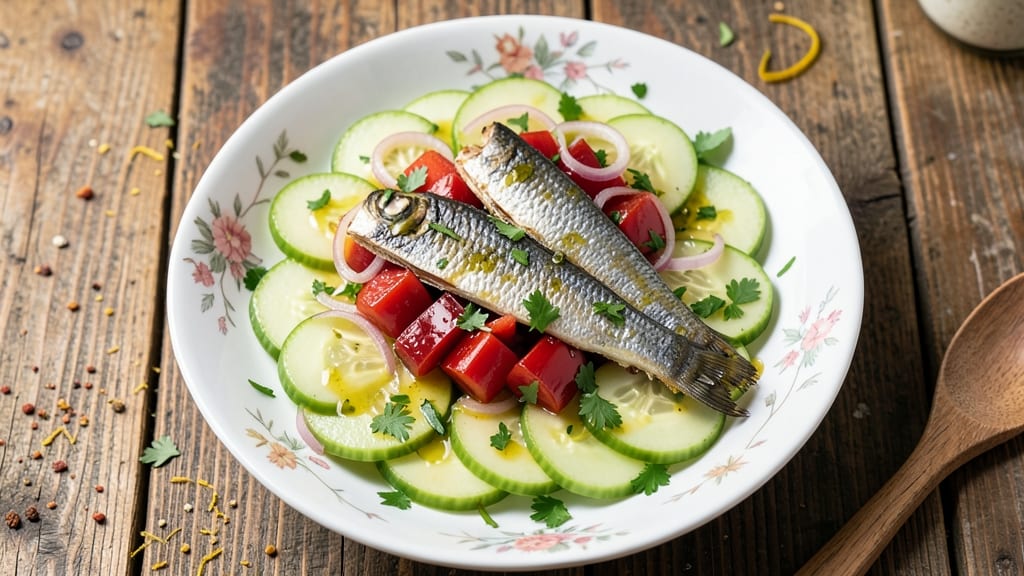
This canned sardine salad recipe transforms simple pantry staples into a Mediterranean-inspired dish packed with protein, crunch, and bright flavors—all without mayo. The secret lies in balancing canned sardines with fresh vegetables, citrus, and herbs, creating a salad that’s both hearty and refreshing.
What makes this recipe stand out is its versatility: it works as a standalone meal, a side dish, or even a topping for toast or crackers.
The base is built on crisp vegetables like cucumbers and bell peppers, which provide the necessary crunch, while canned sardines deliver rich, umami depth. A zesty lemon-olive oil dressing ties everything together, ensuring each bite is vibrant and satisfying.
Unlike traditional sardine salads, this version skips mayo entirely, making it lighter yet equally flavorful.
What you’ll end up with is a salad that’s perfectly balanced—creamy from the sardines, crisp from the vegetables, and bright from the dressing.
It’s a dish that’s quick to prepare but feels special enough for a plated meal, whether you’re serving it for lunch or as part of a larger spread. The best part?
It keeps well in the fridge for up to three days, so you can make it ahead and enjoy it all week.
This recipe is ideal for those looking to incorporate more seafood into their diet without the hassle of fresh fish. The canned sardines add convenience and nutrition, while the fresh ingredients bring freshness and texture. Perfect for pescatarians, vegetarians looking for a protein boost, or anyone craving a Mediterranean-inspired meal.
Ingredients for canned sardine salad
Pantry staples meet Mediterranean flair for a protein-packed salad that skips mayo entirely.
| Ingredient | Amount | Notes |
|---|---|---|
| Canned Sardines in Olive Oil 🐟 | 2 cans | Drained, high-quality Mediterranean brands preferred |
| English Cucumbers 🥒 | 1 whole | Seedless, sliced into 1/4-inch pieces |
| Red Bell Pepper 🌶️ | 1 whole | Seeded, diced into 1/4-inch pieces |
| Red Onion 🧅 | ½ whole | Thinly sliced, soak in cold water 5 mins |
| Fresh Parsley 🌿 | ¼ cup | Flat-leaf, finely chopped |
| Extra-Virgin Olive Oil 🫒 | ½ cup | Lightly fruity, not strong |
| Fresh Lemon Juice 🍋 | 3 tbsp | From 1 medium lemon |
| Garlic Cloves 🧄 | 2 cloves | Minced, fresh preferred |
| Diamond Crystal Kosher Salt 🧂 | ½ tsp | Adjust to taste |
| Fresh Dill 🌿 | 2 tbsp | Chopped, stems removed |
| Capers 🫒 | 1 tbsp | Chopped, optional for briny kick |
| Black Peppercorns 🌶️ | ¼ tsp | Freshly cracked |
| Breadcrumbs 🍞 | ¼ cup | Panko preferred for texture |
The sardines are the heart of this dish, so opt for high-quality canned varieties in olive oil—brands like Wild Planet or Italian Mare are excellent choices. Look for cans with vibrant olive oil (not cloudy) and sardines that smell briny but fresh. The fresh vegetables need to be crisp, so grab cucumbers and bell peppers that are firm to the touch. If you can't find English cucumbers, regular seedless ones work fine. For the herbs, fresh parsley and dill are non-negotiable—they bring that bright Mediterranean freshness. If you're short on time, dried herbs will work at half the amount, but fresh is ideal.
No capers? Skip them or substitute with a pinch of sea salt for a similar briny note. Running low on fresh dill? Dried dill at one-third the amount gets you close, though it won't have the same pop. The breadcrumbs are optional but add a nice crunch—panko is my go-to, but regular breadcrumbs work too. For the olive oil, avoid heavily perfumed varieties like those with strong herbal notes; a mild, fruity oil keeps the flavors balanced. If you're serving this as a topping, toast the breadcrumbs lightly in olive oil before adding them for extra crunch.
This salad keeps beautifully in the fridge for up to 3 days, though the texture holds best for the first 2. Store it in an airtight container with a layer of olive oil on top to preserve freshness. The flavors actually improve after sitting overnight, as everything melds together. For meal prep, double the batch—it’s perfect for lunches or as a protein boost in wraps. If you make it ahead, wait to add the lemon juice until serving to keep the vegetables crisp.
Why You'll Love This Recipe
- No-Chop Nightmare: I swear, this is the only salad where I actually wish I’d bought pre-diced veggies—because the cucumbers and bell pepper barely need work. Toss them in whole, slice the onion thin (five minutes max), and the sardines? Already perfect. Honestly, the only knife I use is for the parsley, and I’m not even chopping it finely.
- Umami Bomb: That olive oil from the sardines? It’s the secret weapon. Rich, briny, and just salty enough to make the crisp cucumbers and sweet bell pepper taste like they’ve been kissed by the Mediterranean sun. Between us, I’ve tried adding lemon or vinegar, but the sardines’ oil does the balancing all on its own—zero effort, maximum flavor.
- Lunchbox Legend: This salad keeps amazingly for days, which means I can prep it Sunday and not think about lunch until Thursday. Pack it in jars or containers, and it’s still fresh—no sad, wilted greens here. My kids (who normally turn their noses up at anything green) actually ask for it in their lunches. Not the prettiest, but the taste makes up for it.
- Budget Power Move: Sardines are my pantry’s best-kept secret—cheap, protein-packed, and they last forever. A single can stretches into three servings, and the rest of the ingredients? Basic, affordable, and often on sale. I’ll be real: this is the kind of meal that lets me buy organic tomatoes for actual snacks, not just salads.
Step-by-step instructions for Mediterranean sardine salad
This bright, crunchy salad delivers Mediterranean flavors without a single drop of mayo.
Prepare the Vegetable Base
Slice the 1 whole English cucumbers into ¼-inch thick pieces and transfer to a large mixing bowl. Dice the 1 whole red bell pepper into ¼-inch pieces and add to the bowl. Thinly slice the 0.5 whole red onion and soak it in cold water for 5 minutes to mellow its sharpness, then drain and add to the bowl.
The vegetables should be evenly distributed—this ensures every bite has crisp texture and vibrant color. I like to work quickly here so the cucumbers don't release too much water, which can make the salad soggy. If you're concerned about moisture, pat the cucumber slices with a paper towel before adding them.
Drain and Flake the Sardines
Open the 2 cans of canned sardines in olive oil and drain them thoroughly, reserving 2 tablespoons of the olive oil from the cans. Using a fork, gently flake the sardines into small pieces—you want them to break apart easily but still retain some texture. Add the flaked sardines to the vegetable mixture.
Don't press too hard when flaking, or you'll end up with a paste. The sardines should maintain some shape while still distributing evenly throughout the salad. This is where the quality of your sardines matters—Mediterranean brands have the best balance of flavor and texture.
Make the Herb and Lemon Dressing
In a small bowl, whisk together the 0.5 cup extra-virgin olive oil, 3 tablespoons fresh lemon juice, 2 cloves minced garlic, 0.5 teaspoon diamond crystal kosher salt, 2 tablespoons chopped fresh dill, 1 tablespoon chopped capers, and 0.25 teaspoon cracked black peppercorns. Pour this dressing over the sardine and vegetable mixture and toss gently but thoroughly to combine.
The dressing should coat the vegetables evenly without making them watery. If the salad looks too dry, add 1 tablespoon of water to loosen it. Taste as you go—this is the moment to adjust seasoning. The lemon juice should brighten the flavors, while the capers add a briny contrast that balances the richness of the sardines.
Add Fresh Herbs and Crunch
Stir in the 0.25 cup finely chopped fresh parsley and the 0.25 cup breadcrumbs. The parsley adds freshness, while the breadcrumbs provide a satisfying crunch that cuts through the creamy texture of the sardines. Toss everything together one final time to ensure the breadcrumbs are evenly distributed.
Let the salad sit for 10 minutes before serving—this allows the flavors to meld and the breadcrumbs to absorb just enough moisture to soften slightly without losing their texture. Serve immediately for the best crunch, or chill for up to 2 hours if you prefer a cooler salad, though the texture will be slightly softer.
Adjust and Serve
Taste the salad one last time and adjust the seasoning if needed. If it tastes too salty, add a splash more lemon juice or a pinch of fresh herbs. If it needs more crunch, sprinkle on an extra 1 tablespoon of breadcrumbs. Serve the salad at room temperature or chilled, garnished with additional chopped fresh dill or a drizzle of extra-virgin olive oil for extra richness.
This salad keeps well in an airtight container in the refrigerator for up to 3 days, making it perfect for meal prep. The flavors only deepen over time, so it's even better the next day. Pair it with crusty bread or grilled fish for a complete Mediterranean-inspired meal.
Pro Tips For Making Canned Sardine Salad
- Drain and Pat Dry: The olive oil in canned sardines is great, but too much makes your salad soggy. Drain them well, then blot the fish on paper towels—this keeps the texture crisp and prevents a greasy mess.
- Slice Cucumbers Thin: English cucumbers hold water like nobody’s business. Cut them into 1/8-inch slices and let them sit in a colander for 10 minutes before mixing—this pulls out excess moisture so your salad stays fresh, not watery.
- Use a Sharp Knife: Chopping red onion and bell pepper with a dull blade crushes the cells, making them release bitter juices. A sharp knife gives clean cuts and keeps the flavors bright—no one wants a salad tasting like onion tears.
- Add Acid Last: Lemon juice or vinegar brightens the dish, but tossing it in too early makes the cucumbers turn limp. Wait until the very end to mix it in—this keeps everything crisp and perky, not sad and wilted.
Essential equipment for great canned sardine salad
Knife Essentials
Start with a sharp chef’s knife (like the Mercer Culinary Genesis) for dicing vegetables and a small paring knife for mincing garlic and herbs. A serrated knife comes in handy for slicing cucumbers without crushing them.
I’ve found that keeping my knives honed regularly makes prep faster and safer—never dull blades! 🔪
Mixing Bowls
Use a large glass or stainless steel mixing bowl (I love Pyrex or Ozeri) to combine ingredients without absorbing flavors. For tossing, a wide, shallow bowl works best—this prevents the salad from getting soggy.
If you’re prepping ahead, opt for airtight containers (like Rubbermaid Brilliance) to store the dressing separately until serving.
Measuring Tools
A precision scale (like OXO Good Grips) ensures accurate measurements for herbs and spices, while a stainless steel measuring spoon set keeps your kitchen organized. For the olive oil and lemon juice, I use a glass measuring cup—it’s easy to read and won’t leach flavors.
A microplane for garlic and small bowl for dressing prep streamline the process too.
Optional Extras
For added texture, toast breadcrumbs in a small skillet over medium heat until golden (about 2-3 minutes). A garlic press speeds up mincing, and a fine-mesh strainer helps drain excess water from soaked onions.
If you love capers, a small bowl with a lid keeps them fresh in the fridge for weeks. 🌟
Storage Containers
Store leftovers in glass airtight containers (like Levitating Glass) to maintain freshness for up to 3 days. If prepping ahead, keep the dressing separate until serving to preserve crispness.
For serving, a slate board or wooden tray elevates the presentation—just arrange the salad in a sunburst pattern for a restaurant-worthy look.
Nutrition facts
Frequently asked questions
Can I use water-packed sardines instead of olive oil-packed?
Yes, but you'll need to add 2 tablespoons of extra olive oil to replace the lost richness. The texture will be slightly less creamy, but the flavor remains balanced. For best results, drain thoroughly and pat dry with a paper towel before flaking.
How do I make this salad spicier?
Add ½ teaspoon of red pepper flakes or 1 finely diced jalapeño to the dressing for heat. For smoky depth, stir in ½ teaspoon of smoked paprika with the breadcrumbs. Always taste first—spices intensify when mixed with citrus!
What if I don't have fresh dill or parsley?
Use 1 tablespoon dried dill (1/3 the fresh amount) and 1 tablespoon dried parsley instead. For extra brightness, add 1 teaspoon of lemon zest to the dressing. The salad will still taste fresh, though the texture will differ slightly.
Can I add other proteins to this salad?
Try ½ cup cooked quinoa for extra fiber or ¼ cup crumbled feta cheese for creaminess. For a heartier meal, add ½ cup chopped hard-boiled eggs. Just adjust the dressing amount if adding moisture-heavy ingredients.
Why does my salad get watery after mixing?
Cucumbers release moisture over time. To prevent sogginess, pat them dry with a paper towel before adding. Also, let the salad sit for 10 minutes before serving—this allows excess liquid to drain slightly. For extra insurance, chill the salad for 30 minutes before eating.