
Salads
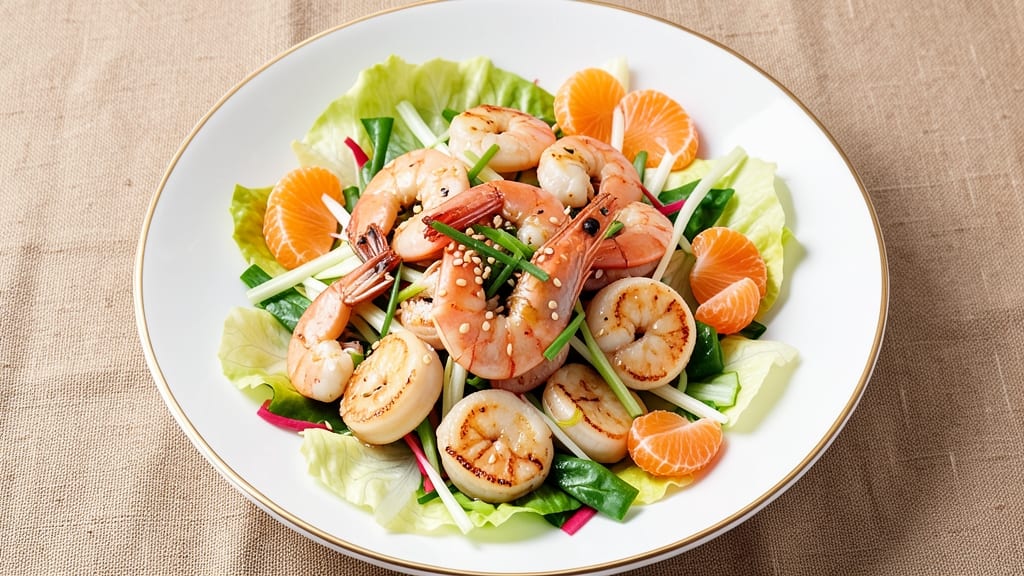
This Chinese seafood salad recipe transforms fresh seafood into a vibrant, restaurant-worthy dish with crisp celery crowns and a bright citrus-lime dressing. The secret lies in tender, poached shrimp and scallops that stay perfectly intact while absorbing the dressing's zesty flavors.
I developed this recipe after craving a lighter take on traditional Chinese seafood dishes—something refreshing yet packed with authentic taste.
The salad begins with a delicate base of butter lettuce and shredded napa cabbage, which provides the perfect crunch and freshness to balance the rich seafood. Thinly sliced celery crowns add a satisfying crispness, while mandarin orange segments bring bursts of sweetness that cut through the umami notes.
The dressing—a harmonious blend of soy sauce, rice vinegar, lime juice, and sesame oil—ties everything together with its signature tangy-sweet profile.
What makes this dish truly special is the technique for keeping the seafood tender yet flavorful. Poaching in a light broth with ginger and garlic ensures the proteins stay moist, while the final toss with the dressing infuses them with vibrant color and depth.
The result is a visually stunning salad that's as elegant as it is delicious, perfect for summer gatherings or a light weeknight dinner.
This recipe is naturally pescatarian and can easily accommodate common allergens—simply swap seafood for grilled chicken or tofu if needed. Garnish with toasted sesame seeds and chopped cilantro for extra texture and aroma. Ready in under 30 minutes, this salad delivers restaurant-quality results with minimal effort.
Ingredients for chinese seafood salad
Fresh seafood and vibrant vegetables meet zesty citrus-lime dressing for this restaurant-quality dish.
| Ingredient | Amount | Notes |
|---|---|---|
| Large Shrimp (Peeled and Deveined) 🦐 | 1 lb | 16-20 count, raw headless shrimp |
| Fresh Scallops 🐚 | 12 piece | Dry-packed, not wet-packed |
| Butter Lettuce 🥬 | 6 whole | Outer leaves removed |
| Napa Cabbage 🥬 | 4 cups | Shredded, thinly sliced |
| Celery Crowns 🧅 | 2 whole | Thinly sliced, ribs removed |
| Mandarin Orange Segments 🍊 | 1 cup | Fresh, peeled segments |
| Fresh Ginger 🌿 | 1 tbsp | Finely grated, peeled |
| Garlic Cloves 🧄 | 3 cloves | Minced, fresh |
| Low-Sodium Soy Sauce 🥄 | ¼ cup | Kikkoman preferred |
| Rice Vinegar 🍶 | ⅛ cup | Seasoned preferred |
| Fresh Lime Juice 🍋 | ⅛ cup | Strained, freshly squeezed |
| Toasted Sesame Oil 🫒 | 1 tbsp | High-quality, aromatic |
| Honey 🍯 | 1 tbsp | Light, for balance |
| Sesame Seeds 🌰 | 1 tbsp | Toasted, for garnish |
| Fresh Cilantro 🌿 | ¼ cup | Chopped, for garnish |
| Vegetable Oil 🫒 | ½ cup | For poaching broth |
| Chicken or Vegetable Broth 💧 | 2 cups | Low-sodium, for poaching |
| Salt 🧂 | 1 tsp | Kosher, for seasoning |
| Black Pepper 🌶️ | ½ tsp | Freshly ground |
The seafood selection is critical here—Kirkland Signature shrimp and Whole Foods dry-packed scallops ensure tender texture. For the cabbage, look for bright white cores at Trader Joe's or Asian markets, which indicate freshness. Celery crowns should be crisp; trim the base and slice into paper-thin ribbons. Mandarin oranges in canned segments work in a pinch, but fresh segments add that restaurant-quality pop. Ginger and garlic should be organic when possible—their freshness elevates the entire dish.
No shrimp? Firm white fish like cod or halibut, cut into bite-sized pieces, works beautifully. Scallops unavailable? Substitute with extra shrimp or sliced mushrooms for texture. For the dressing, low-sodium soy sauce is essential—regular brands can overpower. The honey balances acidity, but agave nectar works in a 1:1 swap. If you can't find seasoned rice vinegar, mix 1 tbsp sugar with plain vinegar. Toast your sesame seeds in a dry pan for 30 seconds—they'll sing with aroma. The broth should be lightly salted to avoid overpowering the seafood.
Poach the seafood immediately after prepping to maintain tenderness. Store unused shrimp and scallops in airtight containers with a paper towel, covered with ice, for up to 2 days in the fridge. The dressing keeps for 5 days refrigerated, but the mandarin oranges and cilantro should be added fresh before serving. For meal prep, assemble the salad 1 hour before serving—the flavors meld beautifully, but celery loses crispness if left too long. Garnish just before serving to preserve the presentation.
Why You'll Love This Recipe
- No-Fuss Protein Pack: I swear by this for busy nights—just toss peeled shrimp and scallops in a hot wok with a splash of soy, a pinch of ginger, and boom, they’re done in 5 minutes flat. The cabbage and lettuce stay crisp while the seafood gets that perfect sear, so you’re not stuck with soggy greens.
- Umami Bomb: Between the garlic-fried shrimp, the briny scallops, and the crunch of celery crowns, every bite is a flavor party. Honestly, I’ll take this over takeout any day—it’s got that deep, savory punch without the greasy aftertaste.
- Lunchbox Hero: This salad keeps perfectly for days, so I prep it on Sundays and pack it for work. The shrimp and scallops stay tender, the dressing clings to everything, and my coworkers always ask for seconds—no sad wilted lettuce here.
- Budget Luxury: Fresh scallops might sound fancy, but a single pound stretches across two big salads, and shrimp is cheaper than you’d think when bought in bulk. It’s my go-to for feeding friends without breaking the bank—plus, leftovers taste just as good the next day.
Step-by-step instructions for Chinese seafood salad
Transform fresh seafood into a vibrant, textured salad with crisp celery and bright citrus notes.
Poach the Seafood in Light Broth
Combine the 2 cups chicken or vegetable broth with the 1 tbsp fresh ginger and 3 cloves garlic cloves in a saucepan. Bring to a gentle simmer over medium heat—you want small, steady bubbles, not a rolling boil. Add the 1 lb large shrimp (peeled and deveined) and 12 piece fresh scallops simultaneously, then reduce heat to low. Poach for exactly 2-3 minutes until the shrimp turn opaque and scallops firm up. The seafood should remain tender, not rubbery.
Use a slotted spoon to transfer the seafood to an ice bath immediately. This stops the cooking process and keeps the texture delicate. Reserve the poaching liquid—it contains precious seafood flavors we'll use later. Drain any excess water from the seafood before proceeding. If the shrimp or scallops release any liquid during poaching, pat them dry with paper towels for a clean presentation.
Prepare the Crisp Celery and Vegetable Base
Slice the 2 whole celery crowns into ¼-inch thick half-moons, removing any fibrous ribs. In a large mixing bowl, combine the celery with the 4 cups shredded napa cabbage and 6 whole butter lettuce (torn into bite-sized pieces). Add the 1 cup mandarin orange segments and toss gently to distribute. The celery should remain crisp—avoid over-mixing which would bruise the vegetables.
In a small bowl, whisk together the 0.25 cup low-sodium soy sauce, 0.125 cup rice vinegar, 0.125 cup fresh lime juice, 1 tbsp toasted sesame oil, and 1 tbsp honey. Pour this dressing over the vegetable mixture and toss again. Let it marinate for 10 minutes at room temperature—this allows the flavors to meld and the celery to soften slightly without losing its crunch.
Assemble and Garnish for Maximum Impact
Drain the poached seafood thoroughly and arrange it over the dressed vegetables. The shrimp and scallops should be evenly distributed, with each serving getting a mix of both. Sprinkle the 1 tbsp sesame seeds and 0.25 cup chopped fresh cilantro evenly over the top. The sesame seeds add a nutty crunch while the cilantro provides a fresh herbal note that cuts through the richness of the seafood.
For the final touch, drizzle the reserved poaching liquid (strain it first to remove any solids) over the salad. This step enhances the umami depth and balances the bright citrus flavors. Toss everything together gently just before serving to maintain the crisp texture of the celery and lettuce. Serve immediately while the seafood is still warm and the vegetables retain their crunch.
Optional Garnish and Serving Suggestion
For an elevated presentation, arrange the salad on a large platter and garnish with additional mandarin orange segments fanned around the edges. The vibrant color contrast creates visual appeal. Serve with steamed jasmine rice on the side to soak up any extra dressing. The combination of warm rice and cool salad creates a satisfying temperature contrast that enhances each component's texture and flavor.
This salad delivers the perfect balance of textures—crisp celery, tender seafood, and delicate lettuce—all unified by a tangy-sweet dressing. The key is timing: assemble everything just before serving to maintain the ideal texture contrast. Each bite should deliver a harmonious blend of seafood sweetness, citrus brightness, and herbal freshness.
Pro Tips For Making Chinese Seafood Salad
- Shock Your Scallops: Dive them into ice water first—even if they’re fresh. I learned this after overcooking scallops twice; the cold stop makes them tender without turning to mush later. Pat them bone-dry afterward or they’ll steam in the pan.
- Cut Celery in Half: Split those celery crowns lengthwise before slicing—it keeps them crisp longer. I used to shred them whole, and by the time the salad was ready, they’d gone limp. This trick adds crunch without extra prep.
- Skip the Overcrowding: Cook shrimp and scallops in two batches if your pan’s too small. I’ve seen people jam everything in, and the result? Soggy seafood and uneven cooking. A little patience here means perfect doneness every time.
- Toss Lettuce Last: Reserve the butter lettuce until the very end—it bruises like nothing else. I used to mix it in early, and the leaves turned sad and wilted. Add it right before serving for that fresh, crisp bite.
Flavor customization for chinese seafood salad
Spicy Chili-Lime Twist
Add 1 tbsp chili garlic sauce and 1 tsp lime zest to the dressing for a fiery kick. I like to use Huy Fong chili crisp for authentic heat. For extra zing, toss in ½ cup sliced Thai bird's eye chilies (seeds removed) just before serving.
This version works especially well with spicy shrimp or fresh chili oil drizzled on top. The lime zest brightens the dish while the chili adds depth—trust me, your taste buds will thank you. 🌶️
Sweet Sesame-Ginger
Swap the honey for 1 tbsp brown sugar and add 1 tsp grated fresh ginger to the dressing for a caramelized sweetness. Toast 1 tbsp white sesame seeds in a dry pan until golden, then sprinkle over the salad.
This variation pairs beautifully with caramelized scallops or sweet potato cubes for a fusion twist. The extra ginger ties all the flavors together beautifully. 🥜
Creamy Yuzu Dressing
Replace the lime juice with ¼ cup yuzu juice (or sub with equal parts lemon and orange juice) and add 1 tbsp Greek yogurt or vegetable cream to the dressing for a silky texture. Garnish with toasted black sesame seeds and thinly sliced scallions.
This lighter dressing works perfectly with grilled octopus or steamed mussels. The yuzu adds a delicate floral note that elevates the entire dish. 🍋
Smoky Black Pepper
Infuse the dressing with ½ tsp smoked paprika and ½ tsp cracked black peppercorns (lightly toasted in a dry pan). For extra smokiness, add 1 tsp liquid smoke (like Elmer's brand) to the poaching broth.
This version pairs wonderfully with grilled shrimp skewers or charred corn kernels. The smoky depth contrasts beautifully with the crisp celery and citrus. 🔥
Herb-Infused Variations
Add 1 tbsp chopped Thai basil or mint leaves to the dressing for a fragrant twist. Garnish with extra herbs and a sprinkle of crushed peanuts for crunch.
This works especially well with raw shrimp sashimi or steamed crab legs. The herbs add freshness while the peanuts provide a satisfying texture contrast. 🌿
Coconut-Lime Fusion
Replace the soy sauce with 2 tbsp coconut aminos and add 1 tbsp coconut milk to the dressing for a tropical twist. Garnish with toasted coconut flakes and lime wheels.
This version pairs beautifully with grilled mahi-mahi or sautéed squid. The coconut adds a subtle sweetness that balances the citrus perfectly. 🥥
Nutrition facts
Frequently asked questions about Chinese seafood salad
Can I use raw seafood instead of poached?
For a sashimi-style salad, use sushi-grade shrimp and scallops (never frozen) and chill them thoroughly. Serve immediately with extra lime juice (1 tbsp) to prevent browning. This version requires ultra-fresh seafood—ask your fishmonger for "dayboat" catches to ensure safety.
How do I make this salad spicier?
Add 1 tsp chili crisp or ½ tsp red pepper flakes to the dressing, plus 2-3 thin slices of fresh chili (like Thai bird's eye) as garnish. For heat without spice, swap scallops for spicy shrimp (cooked with chili oil) or serve with sriracha drizzle on the side.
Can I prepare this salad ahead of time?
Assemble the dressing and vegetables up to 4 hours ahead—store separately in airtight containers. Keep the poached seafood in the fridge (covered) for no more than 2 days. Toss everything together just before serving to maintain crispness. The celery will soften if left too long.
What's the best seafood substitute if I can't find shrimp or scallops?
Use firm white fish like cod or halibut (cut into bite-sized pieces) or calamari (sliced rings). For a vegetarian option, try marinated tofu or king oyster mushrooms (sautéed with soy sauce and garlic). Adjust poaching time—fish needs 3-4 minutes while mushrooms cook in 2 minutes.
Why did my celery turn soggy?
Over-mixing the salad breaks down celery fibers, releasing water. Toss gently and add vegetables to the dressing just before serving. For extra crunch, store celery and cabbage dry in the fridge and add them to the bowl last. Also, avoid using ice-cold seafood—let it sit at room temperature for 5 minutes before assembling.