
Salads
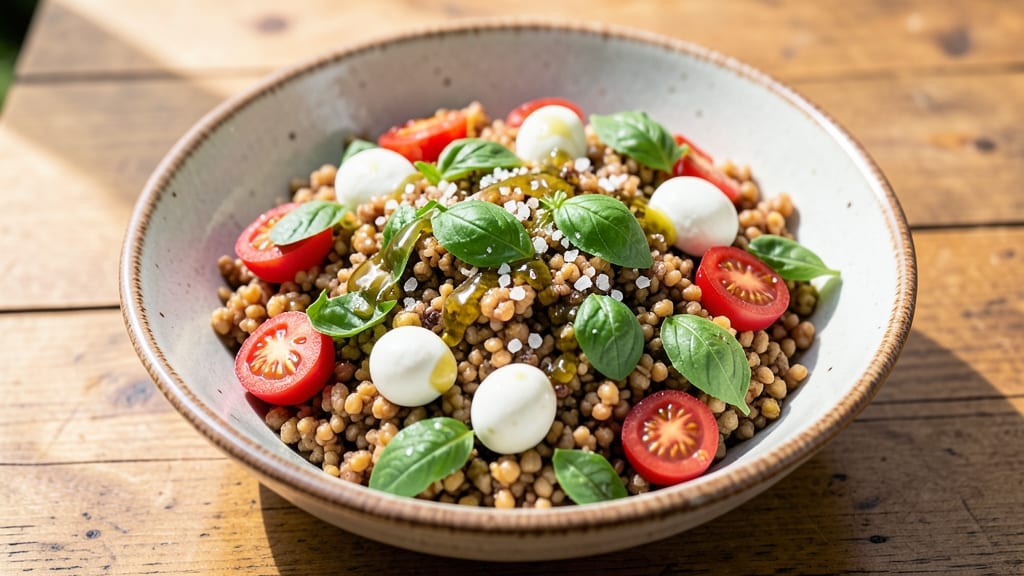
This Caprese farro salad recipe transforms simple ingredients into a vibrant, restaurant-quality dish that balances creamy mozzarella, juicy tomatoes, and fresh basil with nutty farro grains. The secret lies in toasting the farro for enhanced nutty flavor and cooking it until perfectly al dente—never mushy.
This salad isn’t just visually stunning with its alternating layers of red, white, and green, but each bite delivers a harmonious blend of textures and flavors that make it a standout vegetarian main or elegant side.
What sets this recipe apart is the technique: farro cooked just until tender yet still firm, paired with ripe tomatoes and fresh mozzarella that stay creamy without turning soggy. A light drizzle of high-quality olive oil and balsamic glaze ties everything together, adding brightness and depth.
The result is a dish that’s hearty enough to satisfy as a meal but elegant enough for summer gatherings or weeknight dinners when you crave something fresh yet substantial.
Assembling this salad is straightforward—layer the farro, sliced tomatoes, and mozzarella in a way that creates visual appeal, then finish with fresh basil leaves and a sprinkle of flaky sea salt. The plating is just as important as the flavors, so take a moment to arrange everything thoughtfully.
Serve it alongside grilled shrimp, as a side to roasted chicken, or on its own with crusty bread to soak up every last drop of that tangy balsamic dressing.
This Caprese farro salad is more than just a dish—it’s a celebration of summer produce and simple techniques that deliver restaurant-worthy results. The farro adds a satisfying chew, while the tomatoes and basil bring freshness that cuts through the richness of the mozzarella.
Perfect for meal prep or last-minute entertaining, it’s a recipe that proves healthy eating can be both nourishing and indulgent.
Ingredients for caprese farro salad
Bright, fresh ingredients that balance nutty farro with creamy mozzarella and juicy tomatoes.
| Ingredient | Amount | Notes |
|---|---|---|
| Farro Grains 🌾 | 1 cup | Uncooked, rinsed thoroughly |
| Extra-Virgin Olive Oil 🫒 | ½ cup | High quality, fruity |
| Vegetable Broth 💧 | 2 cups | Low sodium preferred |
| Cherry Tomatoes 🍅 | 1 ½ lb | Ripe, halved lengthwise |
| Fresh Mozzarella 🧀 | 8 oz | Bocconcini or pearl shape |
| Fresh Basil Leaves 🌿 | 1 cup | Packed, stems removed |
| Balsamic Glaze 🍷 | 2 tbsp | Reduced, not sweetened |
| Flaky Sea Salt 🧂 | 1 tsp | Kosher or Maldon |
| Freshly Ground Black Pepper 🌶️ | ½ tsp | Freshly cracked |
| Lemon Zest 🍋 | 1 tsp | From organic lemon |
| Garlic Cloves 🧄 | 2 cloves | Minced for dressing |
| Red Wine Vinegar 🍷 | 1 tbsp | For dressing balance |
| Toasted Pine Nuts 🥜 | ¼ cup | Optional crunch topping |
The farro is the foundation here—look for pearled farro at specialty stores like Whole Foods or Trader Joe's for the best texture. Fresh mozzarella is non-negotiable; bocconcini or pearl shapes hold together better than pre-shredded. Cherry tomatoes should be deep red and firm—avoid the mealy ones. For the olive oil, Californian or Italian varieties add the most flavor. Toasting the farro in the oil before adding broth unlocks its nutty potential, so don't skip that step. Basil leaves should be bright green and fragrant—if they smell dull, they're past their prime.
No fresh mozzarella? Fresh ricotta salata works in a pinch, though texture differs. Substitute sun-dried tomatoes for cherry tomatoes if needed, but soak them first to soften. The balsamic glaze can be homemade by simmering balsamic vinegar until thickened, or grab the reduced Giovanni Ruggieri brand from Italian markets. For the dressing, lemon juice works if you're out of vinegar, but the acid balance shifts. Pine nuts expensive? Toasted walnuts or pecans add similar crunch. Always toast your nuts—raw lacks flavor. The garlic in the dressing should be minced, not powdered—fresh makes all the difference.
Farro keeps best in the fridge for 5 days once cooked—store in an airtight container with a drizzle of olive oil on top to prevent drying. Fresh mozzarella lasts 3 days max; wrap it in paper towels to absorb moisture. Assemble the salad just before serving to keep tomatoes crisp and basil vibrant. This dish reheats poorly—eat within 2 hours of assembly. For meal prep, store components separately and toss together when ready. The dressing can be made 3 days ahead and stored in the fridge.
Why You'll Love This Recipe
- One-Pot Wonder: I swear by this recipe because it’s literally one pot—no chopping boards, no extra bowls. Toss farro with broth, let it simmer, then fold in tomatoes and mozzarella at the end. The grains absorb all that olive oil flavor right in the pot, so cleanup is just a quick rinse.
- Creamy Crunch Magic: That fresh mozzarella? It melts just enough to coat the farro while staying springy—no rubbery bits here. And the cherry tomatoes? Bursting with juice every bite. Honestly, the contrast of textures makes this salad feel like a little Italian vacation in your mouth.
- Meal Prep MVP: Between us, this keeps perfectly for 4 days in the fridge. The farro stays chewy, the mozzarella holds its shape (if you drain it well), and the tomatoes? Just add fresh basil and a drizzle of olive oil when you’re ready to eat. My lunchbox’s new best friend.
- Budget Bright Spot: Farro’s pricier than rice, but a big batch stretches forever—this feeds four for under $12 (check me). Mozzarella balls are cheap in bulk, and cherry tomatoes are in season half the year. It’s fancy enough for company but won’t break the bank on a Tuesday.
Step-by-step instructions for Caprese farro salad
Here's how to assemble this vibrant, textured salad with perfectly al dente farro and fresh Italian flavors.
Cook the Farro to Al Dente Perfection
Rinse the 1 cup farro grains thoroughly under cold water to remove any bitterness. In a medium saucepan, combine the rinsed farro with the 2 cups vegetable broth and bring to a boil over high heat. Once boiling, reduce heat to medium-low, cover with a tight-fitting lid, and simmer for 25-30 minutes until the grains are tender but still have a slight bite.
Here's the thing—you want the farro to be al dente, not mushy. Test for doneness by tasting a grain: it should be firm with a slight resistance in the center. If it's still crunchy after 30 minutes, add 2-3 tablespoons of water and cook another 5 minutes. Drain any excess liquid and let the farro cool completely before assembling the salad.
Prepare the Tomato-Basil Dressing
In a small bowl, combine the 0.5 cup extra-virgin olive oil with the 1 tablespoon red wine vinegar, 1 teaspoon lemon zest, and 2 minced garlic cloves. Whisk vigorously until fully emulsified. This dressing forms the bright, tangy base that ties all the components together.
Next, add the 1 cup fresh basil leaves and 1.5 pounds halved cherry tomatoes to the dressing mixture. Gently toss everything together, being careful not to crush the tomatoes. Let the mixture marinate for 10 minutes at room temperature—this allows the flavors to meld and the basil to release its aromatic oils. The tomatoes should develop a slightly glossy appearance from the dressing.
Assemble the Caprese Components
In a large mixing bowl, combine the cooled farro with the tomato-basil mixture. Add the 8 ounces fresh mozzarella (cut into ½-inch cubes if using bocconcini) and gently fold everything together. The mozzarella should be distributed evenly throughout the salad without being overmixed—just enough to combine.
Season immediately with the 1 teaspoon flaky sea salt and 0.5 teaspoon freshly ground black pepper. Sprinkle the 1 teaspoon lemon zest over the top for an extra brightness. Taste and adjust seasoning if needed—this is where you can really customize the balance of salt, acid, and sweetness to your preference.
Finish with Balsamic and Crunch
Drizzle the 2 tablespoons balsamic glaze evenly over the salad in a zigzag pattern. The glaze should coat the farro and mozzarella pieces but not pool at the bottom. Immediately toss gently to distribute the glaze evenly—this is the moment that matters: the balsamic should cling to the other components rather than pooling.
Finally, sprinkle the 0.25 cup toasted pine nuts over the top for a satisfying crunch. The pine nuts should be evenly distributed—don't worry if they're not perfectly uniform, as the natural variation adds to the rustic appeal. Serve immediately while the farro is still warm or let it chill for 30 minutes in the refrigerator for flavors to develop further.
Pro Tips For Making Caprese Farro Salad
- Rinse Farro Twice: I learned this the hard way—skipping the second rinse leaves your farro gummy and chewy. After cooking, drain it, then run cold water over it while stirring for 30 seconds to stop the cooking and remove excess starch. (Yes, even if you’re impatient like me.)
- Salt the Broth: Don’t skimp on salt in the vegetable broth—this isn’t a bland base. Use at least 1 teaspoon per 2 cups of broth, or the farro will taste flat. I used to forget, and the salad never felt satisfying.
- Halve the Tomatoes: Whole cherry tomatoes get mushy in this salad, especially when tossed with mozzarella. Cut them in half and remove the cores first—this keeps them crisp and prevents a soggy mess. (Your future self will thank you.)
- Drain Mozzarella Well: Fresh mozzarella is 70% water—if you skip draining it, your salad will turn into a watery puddle. Wrap the ball in paper towels, press it gently for 5 minutes, then blot excess moisture before slicing. (Does it look weird? Yes. Does it work? Every single time.)
Dietary considerations for this recipe
Vegetarian Protein Boost
This Caprese farro salad delivers 12-15 grams of plant-based protein per serving thanks to the farro and mozzarella combo. Farro is a complete protein when paired with dairy, making it a standout vegetarian option.
For extra protein, add white beans (½ cup cooked) or toasted chickpeas (¼ cup) to your bowl. 💪
Gluten-Free Adaptation
Farro contains gluten, but you can easily swap it for certified gluten-free grains like quinoa or millet. Use a 1:1 ratio—replace the farro with 1 cup cooked quinoa or 1 cup cooked millet.
These grains hold up well to the same cooking method and add their own nutty depth. Always check labels for cross-contamination warnings if gluten sensitivity is a concern.
Dairy-Free Substitutions
Skip the mozzarella and opt for vegan mozzarella alternatives like Miyoko's or Violife brands. For a lighter option, use marinated tofu cubes (½-inch pieces) or cashew ricotta (blend ½ cup soaked cashews with 2 tbsp lemon juice and 1 tbsp nutritional yeast).
These swaps maintain creaminess while keeping the dish dairy-free. 🌱
Low-Carb Version
Cut carbs by reducing the farro to ½ cup and adding 1 cup chopped cucumber and ½ cup halved grape tomatoes for volume. Replace mozzarella with 2 oz sliced prosciutto (if not strictly vegetarian) or avocado chunks for healthy fats.
This version keeps the salad hearty while slashing carbs to about 15g per serving.
Allergen-Friendly Tips
For nut allergies, replace pine nuts with toasted pumpkin seeds or sunflower seeds. If seafood allergies are a concern, omit the optional prosciutto and stick to vegan mozzarella.
Always check labels on store-bought balsamic glaze for hidden allergens—some brands add nuts or dairy derivatives. Keep a separate toasting pan for seeds/nuts to avoid cross-contamination.
Nutrition facts
Frequently asked questions
Can I make this Caprese farro salad ahead of time?
Yes, but assemble it just before serving to keep the tomatoes crisp and basil vibrant. Store cooked farro in an airtight container for up to 5 days in the fridge, and fresh mozzarella for 3 days max. Keep dressing separate until ready to toss—this prevents sogginess. Refrigerate for 30 minutes before serving to let flavors meld.
What if I don't have cherry tomatoes?
Use heirloom tomatoes or grape tomatoes instead—they hold up well when halved. For a sweeter option, try peach tomatoes. Avoid overcrowding by adjusting quantities: use 1.5 cups of halved tomatoes instead of 1.5 pounds cherry tomatoes. The key is keeping them firm and juicy for that fresh Caprese bite.
Why does my farro turn mushy?
Overcooking is the usual culprit! Farro should cook for 25-30 minutes—test by tasting a grain for al dente texture. If using older farro, it may need 5-10 minutes less. Always rinse it first to remove excess starch. For extra insurance, use a 1:4 ratio of farro to liquid (like the recipe) and drain any excess water after cooking.
How do I make this salad more substantial for a main dish?
Add grilled chicken or shrimp to make it a hearty meal. For vegetarian options, include white beans (½ cup cooked) or toasted chickpeas (¼ cup) for protein. Double the farro to 2 cups cooked and add avocado slices for healthy fats. Serve with crusty bread to soak up all the balsamic dressing.
Can I use dried basil instead of fresh?
Fresh basil is ideal for its bright flavor and aroma, but you can use 1 tablespoon dried basil if needed. Reduce the amount by ⅓ since dried basil is more concentrated. For best results, crush the dried basil between your fingers to release its oils before adding. Fresh basil leaves also add visual appeal—consider using a mix of both for the best of both worlds.