
Salads
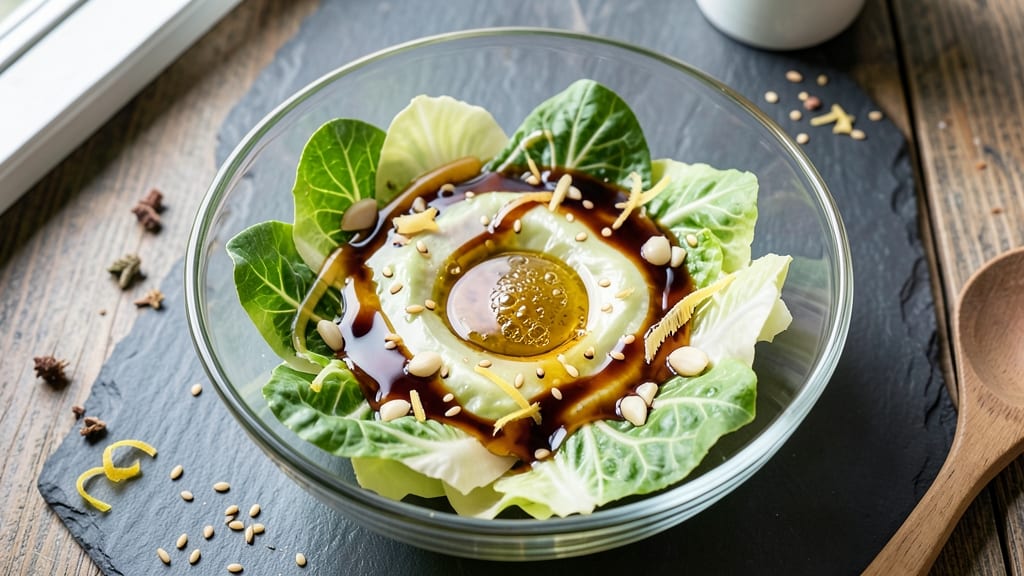
This Chinese cabbage salad dressing recipe transforms simple greens into a vibrant, flavor-packed experience with just five ingredients. The secret lies in balancing sesame oil's nutty depth, ginger's sharp brightness, and soy sauce's umami richness—creating a sauce that clings perfectly to crisp cabbage leaves.
I developed this after realizing store-bought dressings lacked the authentic Asian-inspired zing that elevates every bite.
The dressing comes together in minutes using pantry staples: rice vinegar for acidity, honey for subtle sweetness, and a touch of garlic for depth. What makes this recipe special is its versatility—it works equally well on shredded cabbage, noodle salads, or even as a marinade for grilled proteins.
The sauce keeps for up to a week in the fridge, making it perfect for meal prep.
What you'll achieve is a dressing with complex layers of flavor—savory, slightly sweet, and aromatic—that transforms ordinary salads into restaurant-quality dishes. The sesame oil adds a signature nutty finish, while the ginger keeps the profile fresh and lively. This recipe delivers professional results without requiring special ingredients or techniques.
Use it immediately on fresh Chinese cabbage or store it for future meals. The balance of flavors ensures it won't overpower delicate greens but instead enhances their natural crunch. Here's everything you need to create this game-changing dressing.
Ingredients for chinese cabbage salad dressing
Five essential ingredients create this restaurant-quality dressing with perfect sesame-ginger balance.
| Ingredient | Amount | Notes |
|---|---|---|
| Extra-Virgin Sesame Oil 🫒 | 2 tbsp | Toasted for authentic aroma |
| Fresh Ginger 🌿 | 1 tbsp | Finely grated, juicy ginger |
| Rice Vinegar 🍶 | 3 tbsp | Seasoned preferred for depth |
| Honey 🍯 | 1 ½ tbsp | Wildflower preferred for complexity |
| Low-Sodium Soy Sauce 🍶 | 2 tbsp | Kikkoman preferred for balance |
| Garlic Cloves 🧄 | 2 cloves | Minced for subtle depth |
| Toasted Sesame Seeds 🌾 | 1 tbsp | For garnish and texture |
| Diamond Crystal Kosher Salt 🧂 | ¼ tsp | Adjust to taste |
| Black Pepper 🌶️ | ⅛ tsp | Freshly cracked for warmth |
The sesame oil is non-negotiable here—Kadoya or La Choy are reliable brands for authentic toasted flavor. Fresh ginger is ideal, but pasteurized ginger in a jar works in a pinch (just drain well). For the rice vinegar, seasoned varieties add subtle umami without extra ingredients. Honey should be wildflower or clover for balanced sweetness—avoid artificial blends. The soy sauce matters too: low-sodium Kikkoman gives you control over salt levels without compromising flavor. Store all ingredients in cool, dark places to preserve their potency—ginger lasts 2 weeks in the fridge once grated, while sesame oil keeps for 6 months unopened.
No sesame oil? Toasted peanut oil at half the amount mimics the nutty profile, though texture will differ. Substitute honey with agave nectar or maple syrup for vegan options, though flavor will shift slightly. Fresh garlic unavailable? Garlic powder at one-third the amount suffices, though fresh is preferred. For extra depth, add 1 tsp fish sauce (if not vegetarian) or 1/2 tsp liquid smoke for umami. The dressing works beautifully with shredded cabbage, noodles, or grilled proteins—just adjust ratios based on moisture content of your base ingredient.
This dressing keeps for 1 week in an airtight container in the fridge, though flavor peaks within 3 days. For longer storage, freeze in ice cube trays—thaw and whisk before use. Garnish with toasted sesame seeds just before serving to maintain crispness. The sauce thickens slightly when chilled, so stir vigorously before each use. Portion into small containers for meal prep—2 tbsp per serving is ideal for cabbage salads, while 1 tbsp per serving works for noodles or proteins.
Why You'll Love This Recipe
- Five-Ingredient Magic: Honestly, this dressing comes together with just a whisk and a bowl—no blender, no fancy tools. The sesame oil adds depth instantly, and the ginger’s sharp bite balances the honey’s sweetness without overpowering.
- Umami Bomb: That low-sodium soy sauce and rice vinegar combo? It’s the secret weapon here. The dressing clings to cabbage like glue, turning every bite into a crisp, tangy, slightly salty crunch—no blandness in sight.
- Meal Prep MVP: I make a big batch on Sundays and keep it in the fridge for the week. It’s perfect for tossing with cold noodles, shredded chicken, or even a quick grain bowl—no last-minute scrambling.
- Budget Brightener: Sesame oil and fresh ginger might sound fancy, but they stretch this dressing far. A little goes a long way, and it’s way cheaper than store-bought dressings that taste like sad, watered-down sauce.
Step-by-step instructions for sesame-ginger dressing
This vibrant dressing transforms simple greens into a restaurant-worthy dish.
Prepare the Ginger and Garlic Base
Using a microplane, finely grate the 1 tablespoon fresh ginger into a small bowl. The texture should resemble wet sand—this ensures maximum flavor extraction. In a separate small bowl, mince the 2 cloves garlic into a fine paste using a chef's knife. I prefer mincing over pressing for even distribution and subtle texture in the dressing.
Set both aside temporarily. The key here is freshness—ginger loses potency quickly, and garlic should be minced just before combining with other ingredients to prevent bitterness. If using pre-minced garlic, drain it thoroughly to remove excess moisture that can dilute the dressing.
Whisk Together Wet Ingredients
In a medium bowl, combine the 2 tablespoons extra-virgin sesame oil, 3 tablespoons rice vinegar, 1.5 tablespoons honey, and 2 tablespoons low-sodium soy sauce. Whisk vigorously for 30 seconds until the honey dissolves completely and the mixture becomes homogeneous. The sesame oil should emulsify slightly, creating a silky base.
Here's the thing—don't rush this step. The honey needs to fully integrate to prevent clumping later. If the mixture looks streaky, add 1 teaspoon warm water and whisk again. The dressing should be smooth with a glossy sheen, indicating proper emulsification.
Incorporate Aromatics and Season
Add the grated ginger and minced garlic to the wet mixture. Stir with a silicone spatula to distribute evenly, then add the 0.25 teaspoon diamond crystal kosher salt and 0.125 teaspoon black pepper. Taste immediately—this is your quality checkpoint. The dressing should balance sweet, tangy, umami, and spicy notes with a subtle heat from the ginger.
Adjust seasoning if needed: add more honey for sweetness, rice vinegar for acidity, or soy sauce for umami depth. I've found that most people need a touch more salt here—the soy sauce already contains sodium, so go light unless you're using unsalted soy sauce.
Rest and Emulsify
Let the dressing sit at room temperature for 5 minutes. This resting period allows flavors to meld and any potential separation to recombine naturally. After resting, whisk vigorously for 1 full minute until completely smooth. The dressing should coat the back of a spoon without breaking.
If it separates slightly, add 1 teaspoon warm water and whisk again. The goal is a velvety texture that clings beautifully to cabbage leaves. For extra insurance, place a piece of plastic wrap directly on the dressing's surface and press gently to eliminate any air bubbles.
Finish and Store
Transfer the dressing to a clean jar or airtight container. Sprinkle the 1 tablespoon toasted sesame seeds on top for texture and aroma. Seal tightly and refrigerate for at least 30 minutes before using—this chilling period enhances the flavors and allows the sesame oil to fully infuse.
The dressing will keep in the refrigerator for up to 1 week. Before each use, give it a good shake and taste—sometimes the flavors deepen after resting overnight. This dressing works equally well on shredded cabbage, slaws, or even as a marinade for proteins.
Pro Tips For Making Chinese Cabbage Salad Dressing
- Grate Ginger Fine: DESCRIPTION: I used to chop it roughly—big mistake. You want that ginger to dissolve smoothly into the dressing, not sit as chunks. Use the small holes of a box grater (or a microplane) and rub it in one direction like you’re mad at it. A teaspoon of freshly grated ginger will release its flavor better than a tablespoon of pre-minced from the jar.
- Warm the Honey: DESCRIPTION: Cold honey is stubborn. Give it a 10-second dip in warm water (or microwave for 5 seconds) to loosen it—this makes it blend into the dressing like silk instead of clumping. I learned this after scraping globs of honey out of my whisk for the third time.
- Add Soy Sauce Last: DESCRIPTION: Soy sauce darkens and dulls when heated. Mix everything except the soy sauce first, then stir it in right before serving. The dressing will stay bright and vibrant, not murky like a forgotten pot of ramen.
- Use Toasted Sesame Oil: DESCRIPTION: Skip the raw stuff—heat ½ teaspoon of sesame oil in a dry pan over medium-low for 30 seconds until it smells nutty and aromatic. Let it cool, then mix it in. The flavor jumps from "oily" to "deeply savory," and it’s worth the 30 seconds. (Yes, even if you’re impatient like me.)
Pro cooking tips for this recipe
Emulsification Secrets
The key to a silky dressing lies in proper emulsification—sesame oil and vinegar naturally resist blending. I use a handheld immersion blender for 10-15 seconds if whisking proves difficult, but a silicon spatula works just as well with vigorous stirring.
The honey acts as a natural emulsifier here, so never skip it—it bridges the oil and vinegar molecules. For extra stability, add 1 tsp cornstarch mixed with 1 tsp water if your dressing separates after chilling.
Ginger Freshness Matters
Fresh ginger makes all the difference—pre-grated ginger loses potency within 24 hours. Always use a microplane for maximum surface area and flavor extraction. If you must use jarred ginger, drain it thoroughly and pat dry with a paper towel to remove excess moisture.
Pro tip: Freeze grated ginger in ice cube trays for up to 3 months—it thaws perfectly for dressings. The ginger should smell bright and citrusy, not musty.
Temperature Control Tips
Work with ingredients at similar temperatures to prevent separation. Let honey and sesame oil sit at room temperature for 10 minutes before combining. Cold ingredients can cause the dressing to break. If your kitchen gets warm, chill the bowl in the freezer for 5 minutes before whisking.
The ideal serving temperature for this dressing is 60-65°F—too cold makes it thick, too warm makes it runny.
Flavor Layering Techniques
Build flavors in stages for maximum impact. First combine the sweet (honey) and acidic (vinegar) elements, then add the umami (soy sauce) and finally the aromatics (ginger/garlic). This progression ensures each component shines without overpowering.
For an extra depth dimension, add ½ tsp fish sauce (if not vegetarian) or 1 tsp toasted sesame paste for nutty richness. Taste after each addition to adjust balance.
Storage Hacks
Store dressing in a glass jar with an airtight lid—plastic can absorb flavors over time. For longer shelf life, freeze in 1-tbsp portions in ice cube trays. Thaw overnight in the fridge and whisk before using.
The dressing actually improves after 24 hours as flavors meld, but never exceed 1 week of refrigerated storage. If it thickens, thin with 1 tsp warm water before using.
Texture Adjustments
For a thicker dressing (ideal for coleslaw), add 1 tsp cornstarch slurry (mix 1 tsp cornstarch with 1 tsp cold water). For a lighter version (perfect for delicate greens), stir in 1 tsp additional rice vinegar.
If the dressing seems too heavy after chilling, whisk in 1 tsp warm water to restore smoothness. The ideal consistency should coat a spoon but still drizzle lightly from a fork.
Nutrition facts
Frequently asked questions
Can I make this dressing without sesame oil?
Yes, but the flavor will differ. Replace the 2 tablespoons sesame oil with 1 tablespoon toasted peanut oil or avocado oil for a neutral base. For a closer substitute, use 1 tablespoon toasted sesame paste mixed with 1 tablespoon water—this mimics the nutty depth while keeping the dressing liquid. The texture will be slightly different but still delicious!
How do I adjust this for spicier cabbage salads?
Add ½ teaspoon sriracha or ¼ teaspoon red pepper flakes for heat, or increase the ginger to 2 tablespoons for natural spiciness. For a balanced kick, blend in 1 teaspoon lime juice—the acidity cuts through the heat while enhancing the dressing's brightness. Adjust gradually and taste after each addition!
Will this dressing work with other greens besides Chinese cabbage?
This dressing pairs beautifully with shredded carrots, cucumber, or even kale. For heartier greens like kale, reduce the dressing slightly (1 tablespoon per serving) since they hold up well to bold flavors. It also works as a marinade for grilled chicken or tofu—just marinate for 15-20 minutes before cooking.
Why did my dressing separate after refrigerating?
This happens when oil and vinegar separate due to temperature changes. Whisk vigorously with 1 teaspoon warm water to re-emulsify. For a permanent fix, blend in ½ teaspoon xanthan gum or 1 teaspoon cornstarch slurry (mix 1 tsp cornstarch with 1 tsp cold water). Always store in a glass jar to prevent further separation!
Can I use this dressing on cold noodle dishes?
Perfectly! This dressing elevates cold soba noodles, rice noodles, or even spaghetti. Use 1 tablespoon per serving for noodles (they absorb less dressing than greens). Toss the noodles with dressing while still warm to help it cling better. Garnish with extra sesame seeds and sliced scallions for freshness!