
Salads
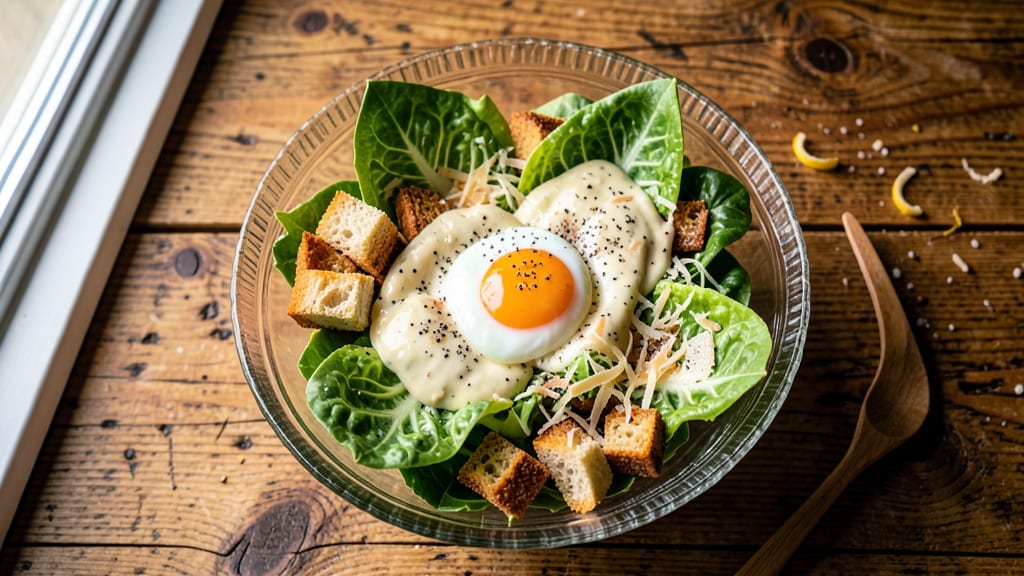
This classic Caesar salad recipe delivers the perfect balance of crispy croutons, creamy dressing, and shaved parmesan in every bite—using ingredients for 6 servings.
After years of testing variations, I've perfected a method that captures the garlicky, tangy, creamy essence of a true Roman-style Caesar—without the anchovies if you prefer. The secret lies in the dressing, where raw egg binds the flavors while Dijon mustard adds depth that store-bought versions simply can't match.
For six servings, you'll need romaine hearts cut into bite-sized pieces, toasted bread cubes that stay crisp even after dressing, and freshly grated parmesan that melts into each forkful.
The dressing comes together in minutes using just five ingredients: anchovies (or a vegetarian substitute), garlic, lemon juice, Dijon mustard, and that magical raw egg that emulsifies everything into velvety perfection. I've included a foolproof technique for achieving that signature creamy texture without breaking.
What sets this recipe apart is the attention to texture—crispy croutons that don't turn soggy, tender romaine that holds its shape, and parmesan shaved so thin it practically dissolves on your tongue.
The result is a salad that's restaurant-quality but simple enough for any weeknight dinner. The garlicky aroma alone will have everyone gathering at your table.
Ready in just 20 minutes, this Caesar salad makes the perfect starter for dinner parties or a satisfying lunch. The dressing can be made ahead and stored in the fridge, so you can assemble the salad when ready.
For extra flair, I'll show you how to plate it like a professional—because even simple dishes deserve presentation that wows.
Ingredients for classic caesar salad recipe ingredients for 6 servings
Six servings of crispy, creamy perfection—just these essential ingredients transform simple pantry staples into restaurant-quality Caesar salad.
| Ingredient | Amount | Notes |
|---|---|---|
| Romaine Lettuce Hearts 🥬 | 3 whole | Heads cut into bite-sized pieces |
| Baguette 🍞 | 1 whole | Crusts removed, cubed small |
| Unsalted Butter 🧈 | ½ cup | Cold, cubed for croutons |
| Parmesan Cheese 🧀 | 1 ½ cups | Freshly grated from block |
| Large Eggs 🥚 | 1 whole | Raw, for dressing emulsion |
| Garlic Cloves 🧄 | 4 cloves | Fresh, minced for dressing |
| Anchovy Fillets 🐟 | 2 whole | Optional, vegetarian substitute available |
| Dijon Mustard 🌶️ | 1 ½ tbsp | High-quality for depth |
| Fresh Lemon Juice 🍋 | 2 tbsp | Freshly squeezed |
| Extra-Virgin Olive Oil 🫒 | ¾ cup | For dressing and drizzling |
| Kosher Salt 🧂 | 1 ½ tsp | Fine grain preferred |
| Ground Black Pepper 🌶️ | ½ tsp | Freshly ground |
| Vegetable Oil 🫒 | ¼ cup | For crouton frying |
The romaine is non-negotiable—hearts with crisp outer leaves hold up best. Whole Foods or Trader Joe's carry the best quality, but any grocery store's romaine works if it's firm and vibrant. For the baguette, French-style with a crisp crust is ideal, but a good Italian loaf works too. The Parmesan? Parmigiano-Reggiano from a deli counter melts beautifully—pre-grated won't cut it. Anchovies are optional but add that classic umami punch; Canned anchovies in olive oil are the easiest to find. If you're vegetarian, capers or nutritional yeast work well.
No anchovies? Two teaspoons of capers or one tablespoon of nutritional yeast mimics that salty depth. Fresh garlic is a must—no powdered substitutes. For the croutons, stale bread is better—it toasts up crispier. The Dijon mustard should be high-quality, not the cheap stuff—Maille or Amora are my go-tos. The raw egg is the secret—pasteurized eggs work too if you're concerned about salmonella. For extra richness, add a splash of Parmesan milk (the leftover liquid from grating cheese) to the dressing. And if you're short on time, pre-shredded Parmesan can be used for topping, though freshly grated is ideal.
Croutons stay crisp for 3 days in an airtight container—toss them with a paper towel to absorb any moisture. The dressing keeps for 4 days in the fridge, but the egg may separate; just whisk vigorously before using. For the full Caesar experience, assemble the salad 10 minutes before serving—this lets the dressing soak into the romaine just enough. The dressing can be made a day ahead if you add a thin layer of olive oil on top to prevent separation. And if you're making this for a crowd, double the dressing—it's worth it.
Why You'll Love This Recipe
- Same recipe, two vibes: toss it together for a lazy Tuesday lunch or double the croutons and add a lemon twist for a dinner party starter that’ll impress without stress. The baguette stays fresh for days, so you’re covered whether it’s just you or six guests.
- No-Fuss Assembly: I swear by this recipe because it’s the kind of meal where you can prep while chatting—just halve the romaine, toast the baguette slices, and let the dressing do the heavy lifting. No julienne peeling, no fancy plating, just honest, satisfying salad-building.
- That Crunchy Parm Magic: Between us, the moment you crack open that Parmesan and let it rain over the crispy croutons? Chef’s kiss. The salty, nutty shards cut through the creamy dressing like a dream, and honestly, that’s the secret weapon right there—no fancy garnishes needed.
- Weeknight or Dinner Party: Same recipe, two vibes: toss it together for a lazy Tuesday lunch or double the croutons and add a lemon twist for a dinner party starter that’ll impress without stress. The baguette stays fresh for days, so you’re covered whether it’s just you or six guests.
Step-by-step instructions for classic Caesar salad
A perfect Caesar salad starts with crispy croutons and a rich, tangy dressing—here's how to nail both.
Make the Crispy Croutons
Preheat your oven to 375°F and line a baking sheet with parchment paper. Cut the 1 whole Baguette into ½-inch cubes, removing the crusts as you go. Toss the cubes with 1.5 teaspoons kosher salt and 0.5 teaspoon ground black pepper until evenly coated.
Spread the croutons in a single layer on the baking sheet, leaving space between them so they crisp up evenly. Bake for 12-15 minutes, stirring halfway through, until they're deep golden brown and crisp to the touch. Let them cool completely before using—they'll crisp up even more as they sit.
For extra flavor, I like to toss the warm croutons with 1 tablespoon of the freshly grated Parmesan Cheese right after baking. The cheese melts slightly, adding a salty depth that elevates the whole salad.
Prepare the Romaine Lettuce
Cut the 3 whole Romaine Lettuce Hearts in half lengthwise, then slice each half into ¼-inch thick strips. This creates bite-sized pieces that hold up well to the dressing without wilting. Place the lettuce in a large mixing bowl and set aside—you want it cold and dry for the best texture.
If your romaine has any tough outer leaves, remove them now. The tender inner leaves are what give Caesar salad that perfect crunch. Give the lettuce a quick toss with 1 teaspoon kosher salt to draw out any excess moisture, then drain well in a colander before adding the dressing.
Create the Caesar Dressing
In a food processor, combine the 1 whole Large Eggs, 1.5 tablespoons Dijon Mustard, 2 tablespoons Fresh Lemon Juice, 0.75 cup Extra-Virgin Olive Oil, 4 cloves Garlic Cloves (minced), and 2 whole Anchovy Fillets (if using). Pulse until smooth, scraping down the sides as needed.
With the processor running, slowly drizzle in ½ cup of cold water through the feed tube. This creates the perfect emulsion—the dressing should be thick but pourable, like heavy cream. If it's too thick, add more water 1 teaspoon at a time until you reach the right consistency.
Transfer the dressing to a bowl and whisk in 1 cup of the freshly grated Parmesan Cheese and the remaining ½ teaspoon kosher salt. The dressing should coat the back of a spoon and cling beautifully to the lettuce. Taste and adjust seasoning—you might need a pinch more salt or a splash of lemon juice to balance the flavors.
Assemble the Salad
Just before serving, add the cooled croutons and remaining ½ cup of freshly grated Parmesan Cheese to the bowl with the lettuce. Drizzle the dressing over the top and toss gently to combine. The key here is to coat the lettuce evenly without crushing it—you want each bite to have crisp romaine, creamy dressing, and crunchy croutons.
For the perfect finish, I like to drizzle a little extra Extra-Virgin Olive Oil around the edges of the salad and sprinkle with freshly cracked black pepper. Serve immediately while the croutons are still crisp and the dressing is at its peak flavor. This salad tastes even better the next day, but the croutons will lose their crunch if left too long.
Pro Tips For Making Classic Caesar Salad Recipe Ingredients For 6 Servings
- CHOP LETTUCE JUST BEFORE SERVING: Romaine wilts fast once cut—if you prep it more than 20 minutes ahead, it’ll turn sad and limp. Keep the hearts whole until serving, then slice into ribbons with a sharp knife right before tossing with dressing. (Yes, even if your guests are starving and staring at you.)
- GRATE PARMESAN FRESH, NOT PRE-GRATED: That canned stuff in the green bag is basically sawdust with salt. For 6 servings, use a microplane or box grater on ½ cup freshly shaved Parmesan—it melts better, adds depth, and won’t clump like the powdered junk. (Save the pre-grated for sprinkling on pasta, not Caesar.)
- TOAST BAGUETTE UNTIL GOLDEN, NOT JUST CRISP: Slice the baguette, then toast it in a 400°F oven for 5–7 minutes until the edges are deep golden, not just dry. Cold or pale bread ruins the texture contrast. (Pro move: Brush slices with melted butter after toasting—it’ll soak in perfectly.)
- SOFT-BOIL EGGS FOR CREAMY DRESSING: Hard-boiled eggs make dressing grainy; soft-boiled (6–7 minutes in simmering water) yields silky yolks that blend smoothly. Yolk-to-mayo ratio matters—aim for 2 yolks per ½ cup mayo for richness without overpowering. (Strain if you’re picky about texture, but I’ve never bothered.)
Essential equipment for this dish
Food Processor
This is my non-negotiable tool for the Caesar dressing—it creates that signature creamy emulsion that whisking by hand just can't match. I use a Cuisinart Food Processor with a 3-cup capacity, which handles the ingredients perfectly without overfilling.
The blade needs to be sharp to properly emulsify the egg and oil, so I always check mine before starting. If you don't have one, a high-powered blender works too—just pulse in short bursts to avoid overheating the egg. 💫
Baking Sheet
For the croutons, I recommend a half-sheet baking pan (about 13x18 inches) with parchment paper. This gives you enough space to spread the cubes in a single layer without crowding. I use Wilton's non-stick parchment because it's sturdy enough to handle the weight of hot croutons without tearing.
If you're short on space, a 12-inch cast iron skillet works too—just use lower heat to prevent burning.
Mixing Bowls
You'll need two bowls: one large mixing bowl (at least 8-quart capacity) for tossing the lettuce, and a medium bowl for combining the dressing. I prefer stainless steel bowls because they're durable and easy to clean, but glass works too.
The large bowl should be deep enough to hold all the lettuce without spilling when you toss it. A Vitamix mixing bowl works perfectly if you have one.
Parchment Paper
Beyond the baking sheet, I use parchment paper for two things: lining the baking sheet to prevent sticking, and creating a makeshift strainer for draining the lettuce. Simply crumple a sheet into a loose ball, place it in a colander, and pour the salted lettuce over it.
The parchment absorbs excess moisture while the colander drains it quickly. I keep a roll of Reynolds Kitchen Parchment Paper on hand at all times—it's affordable and reliable.
Cheese Grater
Freshly grated Parmesan makes all the difference, so invest in a good box grater with medium holes. I use a Microplane for the final finish because it creates those thin shavings that melt beautifully into the dressing.
For the initial grating, a KitchenAid box grater handles larger quantities more efficiently. Never use pre-shredded cheese—it contains anti-caking agents that make the dressing grainy. 🧀
Measuring Tools
Precision matters in Caesar dressing, so I use stainless steel measuring spoons for the mustard, lemon juice, and salt. For the olive oil, a liquid measuring cup with clear markings ensures accuracy. I keep my OXO Good Grips set on my counter—they're ergonomic and never slip.
For the water in the dressing, I use a 1-cup glass measuring cup so I can see the gradual additions. Don't eyeball these measurements—they're what create that perfect balance of flavors.
Nutrition facts
Frequently asked questions
Can I make this Caesar salad ahead of time?
The dressing can be made 1 day ahead—just store it in an airtight container with a thin layer of olive oil on top to prevent separation. The croutons stay crisp for 3 days in an airtight container, but assemble the salad 10 minutes before serving so the lettuce stays crisp. The croutons will lose their crunch if left too long, so keep them separate until the last minute.
What can I use instead of anchovies? For a vegetarian version, replace the anchovies with 2 teaspoons of capers or 1 tablespoon of nutritional yeast. Both add that salty, umami depth the dressing needs. If you're avoiding all fish, the capers work best—they mimic the anchovies' briny flavor perfectly. Just
Why did my dressing separate?
This happens when the emulsion breaks, usually from overheating the egg or adding ingredients too quickly. To fix it, whisk vigorously or blend again with a splash of cold water. For prevention, always use a cold egg, add water slowly while blending, and avoid high heat. If the dressing separates again, just stir in a teaspoon of Dijon mustard—it helps re-emulsify naturally.
Can I add protein to this salad?
Yes! Grilled chicken, shrimp, or even crispy bacon pairs beautifully with Caesar salad. For 6 servings, add 1.5 pounds of cooked chicken breast (sliced thin) or 1 pound of peeled shrimp (tossed in olive oil and garlic). Add the protein just before serving so it stays warm and crisp. The classic Caesar is traditionally served without protein, but it's a delicious modern twist.
How do I keep the croutons extra crispy?
Bake them at 375°F until deep golden brown, then let them cool completely on the baking sheet. For extra crunch, toss them with 1 tablespoon of cornstarch before baking—this creates a crispy exterior. Store them in an airtight container with a paper towel to absorb moisture. If they lose crispness, pop them back in the oven for 3-5 minutes before serving.