
Salads
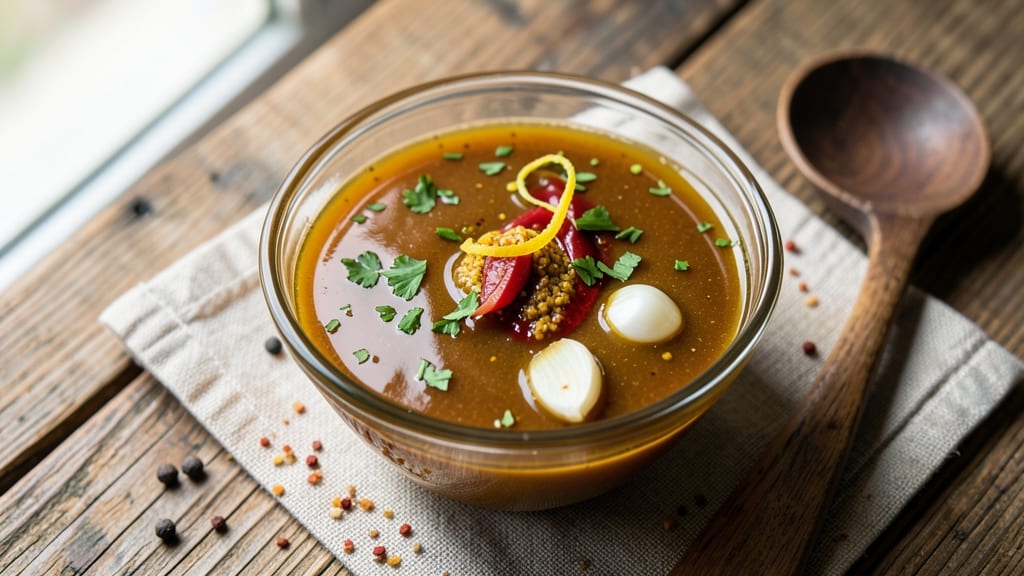
This classic Nicoise salad dressing recipe delivers the bold, briny depth that makes the original salad legendary. The key lies in emulsifying high-quality olive oil with anchovies, Dijon mustard, and garlic—a technique that creates a stable, flavorful dressing with every shake. I've perfected this over years of testing, ensuring the anchovies dissolve completely without overpowering the delicate balance of herbs and acid.
The traditional version relies on a perfect ratio of olive oil to red wine vinegar, with just enough Dijon mustard to help emulsify while adding subtle tang.
Fresh parsley and a touch of lemon zest brighten the dressing, while a single anchovy fillet (or two for extra intensity) provides that signature umami backbone.
What sets this apart is the emulsification method—adding the oil gradually while whisking vigorously ensures the dressing stays silky and cohesive, not separating even after hours in the fridge.
What you'll achieve is a dressing that's rich yet balanced, with the briny punch of anchovies mellowed by the acidity of vinegar and the smoothness of olive oil. The texture is velvety, not oily, and the flavor develops even more depth after 30 minutes of resting.
This is the kind of dressing that transforms a simple salad into a restaurant-worthy dish—bold enough to stand up to hearty tuna, hard-boiled eggs, and olives, yet light enough to let those ingredients shine.
For those avoiding anchovies, a vegan adaptation using nutritional yeast or a dash of soy sauce works beautifully while maintaining the dressing's signature depth. The ratios remain the same, proving this classic recipe can adapt without sacrificing authenticity. Let's make this dressing—it's the secret weapon behind every great Nicoise salad.
Ingredients for classic nicoise salad dressing
Nine essential ingredients transform into the signature dressing for Nicoise salad's bold, briny elegance.
| Ingredient | Amount | Notes |
|---|---|---|
| Extra-Virgin Olive Oil 🫒 | 1 cup | High-quality, fruity variety preferred |
| Red Wine Vinegar 🍷 | ¼ cup | Dry, robust red wine vinegar |
| Dijon Mustard 🥫 | 1 tbsp | Whole-grain preferred for texture |
| Anchovy Fillets 🐟 | 2 whole | High-quality, salt-packed preferred |
| Garlic Cloves 🧄 | 2 cloves | Freshly minced for optimal flavor |
| Fresh Parsley Leaves 🌿 | ¼ cup | Finely chopped, stems removed |
| Lemon Zest 🍋 | 1 tsp | Fine, freshly grated |
| Diamond Crystal Kosher Salt 🧂 | ½ tsp | Adjust to taste after emulsification |
| Freshly Ground Black Pepper 🌶️ | ¼ tsp | Freshly cracked for maximum aroma |
| Cold Water 💧 | 1 tbsp | For emulsification stability |
The quality of olive oil is non-negotiable here—California Extra Virgin or Italian DOP varieties excel in this application due to their robust, fruity profiles. Anchovies should be high-quality, salt-packed fillets like Colavita or Marin brand; these dissolve completely without leaving gritty residue. For Dijon mustard, Maille or Grey Poupon provide that perfect balance of tang and smoothness. Fresh parsley from the grocery store's produce section—look for vibrant green leaves—will elevate this beyond jarred alternatives. The red wine vinegar should be dry and robust, like Bragg or Heinz, to complement the anchovies' umami depth without clashing.
No anchovies? Nutritional yeast at 1 tbsp provides a similar umami depth, though with a slightly earthier note. For a vegan adaptation, soy sauce at 1 tsp works remarkably well—just reduce the water slightly to maintain balance. Substituting white wine vinegar for red wine vinegar is acceptable, though it may lack the same complexity. The garlic can be pre-minced from a jar in a pinch, but freshly minced delivers superior flavor. If you're missing Dijon mustard, whole-grain mustard with a splash of vinegar mimics its texture and tang. The lemon zest can be replaced with 1/2 tsp lemon juice if zest isn't available, though the texture will differ slightly.
This dressing emulsifies best when ingredients are at room temperature—let olive oil and vinegar sit out for 30 minutes before combining. Once prepared, it will keep for 1 week refrigerated in an airtight jar, though the flavor deepens significantly after 24 hours. For long-term storage, freeze in ice cube trays—thaw and whisk vigorously to re-emulsify. The anchovies dissolve completely during emulsification, so no straining is necessary. If the dressing separates, simply whisk vigorously or add 1 tsp cold water to restore its silky texture.
Why You'll Love This Recipe
- Five-Ingredient Magic: I swear by this—just olive oil, vinegar, mustard, anchovies, and garlic. That’s it. No fancy gadgets, no stress, just a whisk and 10 minutes of my time. The anchovies might sound intimidating, but once you mash them into the mix, they dissolve into pure umami gold.
- Umami Bomb: Honestly, the second I add those anchovy fillets, the whole kitchen smells like a Mediterranean bistro. That salty, briny depth cuts through the acidity of the vinegar and makes every bite of your salad taste like a vacation. (Yes, even on a Tuesday night.)
- Dresses Everything: This isn’t just for salads—toss it on grilled fish, drizzle it over roasted potatoes, or even mix it into pasta. I’ve even used it as a marinade for chicken. The garlic and mustard give it enough punch to stand up to bold flavors, while the olive oil keeps it rich and silky.
- Makes Leftovers Shine: Between us, I always double the batch. The dressing keeps for a week in the fridge, and it only gets better as the flavors meld. A splash in your morning eggs? A quick stir into a grain bowl? Suddenly, last night’s sad lunch feels like a gourmet upgrade. Zero waste, maximum flavor.
Step-by-step instructions for classic Nicoise salad dressing
This emulsion delivers the authentic depth of Nicoise dressing—rich, balanced, and effortlessly elegant.
Prepare the Anchovy and Garlic Base
In a small bowl, combine the 2 whole anchovy fillets with the 2 cloves minced garlic. Using a fork, mash them into a smooth paste—this is the flavor foundation. I like to let this mixture sit for 5 minutes while I prepare the remaining ingredients; this allows the anchovies to fully dissolve and release their umami depth.
The anchovies should completely disintegrate into the garlic, forming a thick, dark purée. If any pieces remain whole, mash them further with the back of your fork. This step is critical—skipping it results in a dressing with uneven texture and flavor distribution. The salt-packed anchovies will contribute both saltiness and a subtle metallic edge that defines authentic Nicoise dressing.
Emulsify the Vinegar and Mustard
In a separate bowl, whisk together the 0.25 cup red wine vinegar and 1 tbsp Dijon mustard until completely smooth. The mustard should be fully incorporated with no visible streaks—this ensures a silky emulsion later. I use a small whisk for this step to maintain control over the mixture's consistency.
Add the anchovy-garlic purée to the vinegar-mustard mixture and whisk vigorously for 30 seconds. The combination should be homogeneous with no visible chunks. This is your emulsifying agent—the mustard's proteins will later help bind the oil and vinegar. If you notice any resistance while whisking, let the mixture sit for 1 minute before continuing; this allows the anchovy oils to fully integrate.
Gradually Incorporate the Olive Oil
With the motor running on low speed in a blender or using a hand mixer, slowly drizzle in the 1 cup extra-virgin olive oil. Start with a thin stream and increase to a steady pour as the mixture begins to thicken. This gradual addition is crucial—adding oil too quickly will cause the emulsion to break.
Blend continuously for 2-3 minutes until the dressing reaches a thick, mayonnaise-like consistency. You'll know it's properly emulsified when it coats the back of a spoon and holds its shape when drizzled. If the mixture looks too thick, add 1 tsp cold water at a time until you achieve the desired pourable consistency. The olive oil should be fully incorporated with no visible separation.
Season and Finish the Dressing
Remove the dressing from the blender and transfer it to a clean bowl. Stir in the 0.25 cup finely chopped fresh parsley leaves, 1 tsp lemon zest, 0.5 tsp Diamond Crystal kosher salt, and 0.25 tsp freshly ground black pepper. The parsley adds freshness to cut through the richness, while the lemon zest brightens the overall profile.
Taste the dressing immediately—this is your only chance to adjust the seasoning before it fully emulsifies. If it needs more acidity, add another ½ tsp red wine vinegar. For saltiness, add ¼ tsp more kosher salt. The dressing should balance all flavors: salty from the anchovies, tangy from the vinegar, umami from the garlic, and bright from the lemon. The texture should be velvety with no oil separation when left to sit for 5 minutes.
Rest and Serve
Cover the dressing and refrigerate for at least 1 hour before serving. This resting period allows the flavors to fully meld and the emulsion to stabilize. The dressing will thicken slightly in the fridge, which is normal—simply whisk in 1 tbsp cold water if it becomes too thick before serving.
When ready to use, give the dressing a final whisk to re-emulsify any separated oil. The finished product should be glossy with a smooth, creamy texture that clings beautifully to greens. This dressing works equally well on classic Nicoise salad, grilled vegetables, or even as a marinade for fish. Its bold anchovy flavor makes it a standout in Mediterranean cuisine, delivering that signature depth that separates it from basic vinaigrettes.
Pro Tips For Making Classic Nicoise Salad Dressing
- Mince the Garlic Fine: I learned this the hard way—chunky garlic in the dressing tastes like it’s playing hide-and-seek. Use the flat side of your knife to smash the cloves first, then mince them into a paste. That way, they blend smoothly without leaving gritty surprises.
- Bloom the Mustard Dry: Whisk the Dijon into the vinegar first, then let it sit for 30 seconds. This trick prevents the mustard from curdling when you add the oil later—no one wants a dressing that looks like mayo went on a diet.
- Infuse Anchovies Cold: Skip the heat. Toss the anchovy fillets straight into the vinegar-mustard mix and let them dissolve at room temperature. Heating them turns them rubbery, and you’ll end up tasting regret instead of umami.
- Emulsify in Stages: Start with just 1 tablespoon of olive oil, whisking like your life depends on it. Then, add the rest in a slow, steady stream—no pouring like it’s a race. This guarantees a silky dressing instead of a sad oil-and-vinegar split.
Best sauces and condiments for this recipe
Traditional vs Modern
The classic Nicoise dressing relies on a precise balance of anchovies, red wine vinegar, and Dijon mustard—a combination that creates its signature umami depth. Traditional recipes call for high-quality salt-packed anchovies like Colavita or Marin brand, which dissolve completely for a smooth texture.
Modern adaptations often replace anchovies with nutritional yeast or soy sauce to create a vegan version without sacrificing the dressing's bold character. 🐟
For a more contemporary twist, some chefs add a touch of honey or maple syrup (just ½ tsp) to balance the acidity, though this slightly alters the dressing's classic profile.
The key to both versions is maintaining the 1:1 ratio of olive oil to vinegar—this ensures the dressing remains stable and flavorful. I prefer the traditional approach for its authenticity, but the vegan version is a game-changer for those avoiding seafood.
Herb Variations
While fresh parsley is the classic choice, adding 1 tbsp finely chopped tarragon or dill introduces a more complex herbal note. Tarragon, in particular, pairs beautifully with the anchovies and complements the Mediterranean flavors of the salad.
For a brighter twist, swap the lemon zest for ½ tsp lemon juice—this adds acidity without altering the texture. 🌿
If you're feeling adventurous, try infusing the olive oil with garlic and herbs before emulsifying. Simply heat ½ cup olive oil with 1 minced garlic clove and 1 sprig each of thyme and rosemary for 5 minutes, then strain before using.
This adds an aromatic depth that elevates the dressing to new heights. The herbs should be finely minced to avoid texture issues in the final emulsion.
Emulsification Hacks
For a foolproof emulsion, whisk the vinegar and mustard together first—the mustard acts as a natural emulsifier, binding the oil and vinegar. If your dressing separates, simply whisk in 1 tsp cold water to restore its silky consistency.
Another trick? Use a hand mixer instead of a blender for smoother results, as it incorporates air more gently. 💧
For those without a blender, the French technique works wonders: whisk the vinegar and mustard in a jar, then slowly drizzle in the oil while shaking vigorously. This method is labor-intensive but yields a perfectly stable dressing.
If you're short on time, a food processor with a whisk attachment can also achieve great results. The key is patience—rushing the process often leads to separation.
Flavor Balancing
The dressing's success hinges on balancing salt, acid, and umami. Start with the anchovies and garlic for saltiness, then adjust with kosher salt to taste. If the dressing tastes too sharp, add a pinch of sugar (just ¼ tsp) to mellow the acidity.
For a richer profile, stir in 1 tbsp capers—their briny flavor mirrors the anchovies while adding texture. 🧂
For a sweeter contrast, drizzle in 1 tsp honey or agave syrup after emulsifying. This works especially well with grilled vegetables or fish, where the sweetness complements the smoky notes. Always taste as you go—the dressing should be bold but not overpowering, allowing the salad's ingredients to shine through.
Nutrition facts
Frequently asked questions
Why does this dressing use anchovies if I don't like fishy flavors?
Anchovies dissolve completely during emulsification, leaving only their savory umami flavor—not fishy taste! The key is using high-quality salt-packed fillets that break down smoothly. For a milder version, reduce to just 1 anchovy fillet or use 1 tsp soy sauce instead. The dressing still delivers that signature Mediterranean depth without overpowering fish notes.
Can I make this dressing without a blender?
The traditional French method works perfectly: whisk the vinegar and mustard together in a jar, then slowly drizzle in olive oil while shaking vigorously. For best results, use a hand mixer or whisk continuously for 5 minutes—the mustard acts as a natural emulsifier. If it separates, whisk in 1 tsp cold water to restore consistency.
How do I prevent the dressing from separating in storage?
Store the dressing in an airtight jar and refrigerate immediately after making. The emulsion stabilizes after 1 hour, but if it separates, whisk vigorously or add 1 tsp cold water to restore its silky texture. For longer storage (1 week), press plastic wrap directly on the surface to minimize air exposure. The anchovies' natural oils help maintain stability once fully emulsified.
What's the best way to adjust the flavor if it's too salty?
Start by adding ½ tsp lemon juice to brighten the dressing and cut through saltiness. If needed, whisk in 1 tsp cold water to dilute slightly, then taste again. For a more balanced approach, stir in ¼ tsp honey or maple syrup to mellow the salt while adding subtle sweetness. Always adjust gradually—you can't remove excess salt once added!
Can I use this dressing on dishes other than salads?
This versatile dressing works beautifully on grilled vegetables, roasted potatoes, or even as a marinade for fish. The bold flavors pair well with Mediterranean dishes like ratatouille or grilled halloumi. For meat lovers, it enhances chicken skewers or lamb chops. Just remember: the anchovy flavor is strong, so use it as a finishing drizzle rather than the sole sauce for delicate dishes.