
Salads
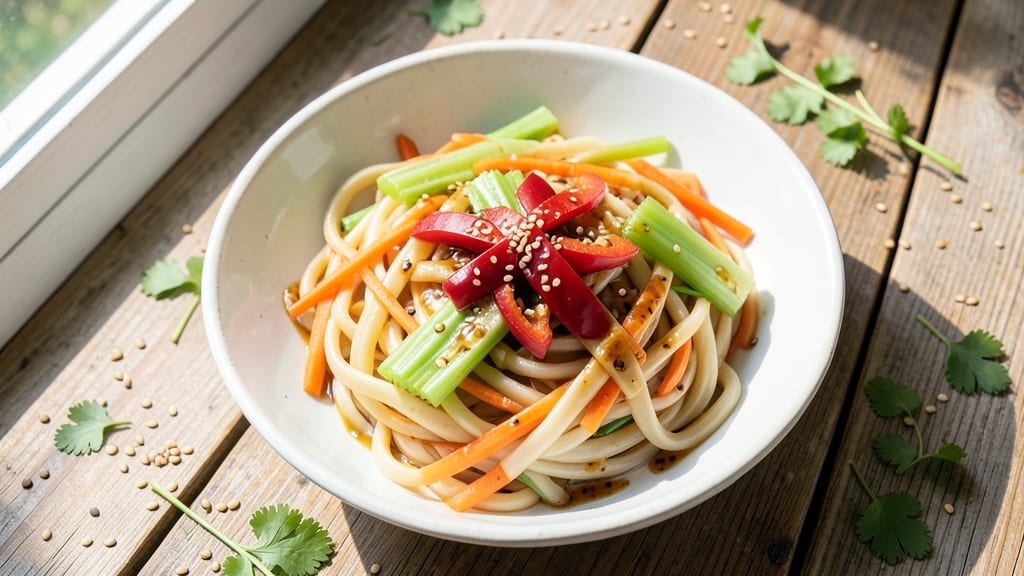
This cold udon salad recipe transforms simple ingredients into a refreshing, restaurant-worthy dish perfect for hot days or quick lunches. The secret lies in crisp celery crowns that add satisfying crunch, balanced by a tangy sesame-ginger dressing that clings to every strand of chewy udon.
I developed this recipe after craving something light yet hearty—no heavy mayo or soggy textures here.
The base is pre-cooked udon noodles (or freshly boiled), chilled until they achieve that perfect bite, while thinly sliced celery and bell peppers provide the signature crunch. A quick-pickled carrot adds brightness, and toasted sesame seeds elevate the dish with nutty depth.
The dressing—just sesame oil, soy sauce, rice vinegar, and fresh ginger—comes together in minutes but makes all the difference.
What you’ll end up with is a crisp, cool salad that’s vegetarian-friendly but easily upgraded with protein like pan-seared tofu or shredded chicken. The flavors are bold yet balanced: nutty, tangy, and slightly sweet, with textures that shift from tender noodles to crisp vegetables in every bite.
It’s the kind of dish that feels special without requiring hours in the kitchen.
Best served immediately after tossing, this salad keeps well for up to 24 hours in the fridge, making it ideal for meal prep. Garnish with extra sesame seeds and sliced green onions for a pop of color and freshness. Let’s get started—your next lunch is about to get an upgrade.
Ingredients for cold udon salad
Crisp celery crowns, chewy udon, and nutty sesame dressing—this salad is a refreshing upgrade for any lunch.
| Ingredient | Amount | Notes |
|---|---|---|
| Pre-Cooked Udon Noodles 🍜 | 8 oz | Or freshly cooked udon |
| Celery Crowns 🧅 | 2 whole | Thinly sliced into ribbons |
| Red Bell Pepper 🍅 | 1 whole | Thinly sliced into strips |
| Carrots 🥕 | 1 medium | Julienned for quick-pickling |
| Sesame Oil 🫒 | 2 tbsp | Toasted sesame oil preferred |
| Soy Sauce 🥢 | 3 tbsp | Low-sodium preferred |
| Rice Vinegar 🍶 | 2 tbsp | Unseasoned preferred |
| Fresh Ginger 🧄 | 1 tbsp | Finely grated, peeled |
| Toasted Sesame Seeds 🥜 | 1 tbsp | Plus extra for garnish |
| Green Onions 🌿 | 3 whole | Thinly sliced, white/green parts |
| Sesame Seeds 🥜 | 1 tbsp | For extra crunch |
| Salt 🧂 | ½ tsp | Kosher or sea salt |
| Black Pepper 🌶️ | ¼ tsp | Freshly ground |
| Lemon Juice 🍋 | 1 tbsp | Freshly squeezed |
| Sugar 🍚 | 1 tsp | Granulated or white sugar |
The celery crowns are the star here—look for crisp, vibrant stalks at the grocery store, not the wilted ones lurking in the back. Trader Joe's and Whole Foods usually have the freshest, but any well-stocked market works. Thinly slicing them into ribbons takes about 30 seconds with a sharp knife—don’t skip this part, it’s what gives the salad that signature crunch. For the udon, pre-cooked packs from Asian markets save time, but if you’re making it fresh, boil until al dente and rinse in cold water immediately to stop the cooking. The carrots? Julienne them yourself—pre-shredded gets soggy fast.
No sesame oil? Toasted peanut oil at half the amount works in a pinch, though it’ll lack that nutty depth. Short on rice vinegar? Apple cider vinegar or lemon juice gets you close, but the dressing won’t be quite as balanced. The ginger is non-negotiable—fresh is best, but if you’ve got dried, use one-third the amount and toast it in a dry pan for 30 seconds first. For the quick-pickled carrots, toss the julienned strips with 1 tbsp rice vinegar, 1 tsp sugar, and a pinch of salt. Let them sit for 10 minutes while you prep the rest—it’s worth the extra minute.
This salad tastes even better the next day—keep it in an airtight container for up to 24 hours. The udon stays chewy, and the dressing clings perfectly. For meal prep, store the dressing separately and toss everything together right before eating. The celery and carrots will stay crisp if you keep them dry—wrap them in paper towels in the container. Garnish with extra sesame seeds and green onions right before serving, because those add the final pop of color and freshness.
Why You'll Love This Recipe
- No Boiling Required: I just rinse the pre-cooked udon and toss it with ice-cold water—no stove, no waiting. The noodles stay perfectly chewy, not mushy, and the celery crowns add that satisfying crunch without any prep work.
- Sesame Oil Magic: That first drizzle of toasted sesame oil? Instant flavor upgrade. It coats every noodle and veggie, turning simple carrots and bell peppers into something dangerously addictive—no fancy sauce needed.
- Lunchbox Hero: Pack this for work or school the night before. The udon holds up for days, and the crunchy veggies stay crisp even after refrigeration. My kids actually eat their salads now—call me a miracle worker.
- Budget Crunch Fighter: Celery crowns and carrots stretch a dollar, and pre-cooked udon is cheaper than fresh. I make this for four people for under $10, and it’s still way more exciting than takeout. Leftovers? They disappear faster than I can reheat them.
Step-by-step instructions for cold udon salad
Here's how to assemble this refreshing, crunchy udon salad with perfect texture every time.
Prepare the Quick-Pickled Vegetables
In a small bowl, combine the 1 medium julienned carrots, 1 tablespoon lemon juice, 1 teaspoon sugar, 0.5 teaspoon salt, and 2 tablespoons rice vinegar. Mix well and let sit for 10 minutes—this creates a bright, slightly sweet contrast that cuts through the richness of the udon. The carrots will soften just enough to add texture without losing their bite.
While the carrots pickle, thinly slice the 2 whole celery crowns into ribbons using a sharp knife or mandoline. Slice the 1 whole red bell pepper into thin strips—about ¼-inch wide. These crisp vegetables form the salad's satisfying crunch, so don't skip this step. I like to work quickly to prevent the celery from wilting while I prep the rest.
Make the Sesame-Ginger Dressing
In a small bowl, whisk together the 3 tablespoons soy sauce, 2 tablespoons sesame oil, and 1 tablespoon finely grated fresh ginger until fully combined. The ginger should dissolve completely—if it doesn't, strain it through a fine-mesh sieve for a silky dressing. This flavor base is what makes this salad uniquely delicious, so don't rush the mixing.
Add the 1 tablespoon lemon juice and 0.25 teaspoon black pepper, then taste and adjust seasoning if needed. The dressing should be tangy, umami-rich, and slightly peppery. If it tastes too strong, thin it with 1 teaspoon water—this helps balance the flavors when tossed with the noodles and vegetables.
Combine Noodles and Vegetables
Drain the 8 oz pre-cooked udon noodles if they came in liquid, then rinse briefly under cold water to cool them down. This prevents the noodles from overcooking when mixed with the dressing. Drain well and transfer to a large bowl. Add the quick-pickled carrots, celery ribbons, and red bell pepper strips.
Pour the dressing over the noodles and vegetables, then gently toss everything together with your hands or a pair of chopsticks. The noodles should be evenly coated without being soggy. If the dressing seems too thick, add 1 tablespoon water to loosen it. Let the salad sit for 5 minutes to allow all the flavors to meld together.
Finish with Crunchy Garnishes
Just before serving, sprinkle the salad with 1 tablespoon toasted sesame seeds and 1 tablespoon sesame seeds for extra texture. Thinly slice the 3 whole green onions and scatter them over the top—this adds a fresh, oniony brightness that cuts through the richness. Give everything one final gentle toss to distribute the garnishes evenly.
Serve immediately while the vegetables are still crisp and the noodles are cool but not cold. This salad is perfect for hot days or as a light lunch—each bite delivers a perfect balance of textures and flavors. Store any leftovers in an airtight container for up to 2 days, but the crunch will diminish over time.
Pro Tips For Making Cold Udon Salad
- CHILL THE NOODLES PROPERLY: Drain the udon, rinse under cold water, then spread them on a wire rack for 10 minutes—don’t just dump them in ice water. This keeps them from turning mushy later, and the texture stays firm enough to hold up in the salad. (I learned this after serving a bowl where the noodles dissolved into a sad, watery mess.)
- JULIENNE VEGETABLES UNIFORMLY: Cut celery, bell pepper, and carrots into exactly 1/4-inch matchsticks—no thicker, no thinner. The even size ensures they soak up dressing the same way, so every bite has the same crunch and flavor. (Yes, it takes a few extra minutes, but your salad won’t look like a veggie dumping ground.)
- DRESS NOODLES SEPARATELY: Toss the udon with just half the dressing first, then mix in the veggies and remaining dressing. This keeps the noodles from getting soggy before they hit the bowl, and the veggies stay crisp. (I used to drown everything at once—big mistake.)
- SWAP SESAME OIL LAST: Add sesame oil after everything else is combined—just a drizzle, not a flood. It’s potent stuff, and you want to taste the other flavors first. (Start with 1/2 teaspoon, taste, then decide if you need more. Trust me, you’ll want to.)
Regional styles of these flavors
Japanese Summer Style
In Japan, this salad is often called "Hiyashi udon" and is a staple during hot summer months. The key difference is the use of chilled udon noodles served in a light broth or topped with a delicate dressing—just like our sesame-ginger version.
I love adding thinly sliced cucumber (about ½ inch thick) and edamame for extra freshness. For an authentic touch, serve it in a wide, shallow bowl with a chilled metal spoon to keep it cool. 🌞
Korean-Inspired Twist
Korean home cooks often transform udon salad into "kongnamul udon" by adding fermented soybean paste (doenjang) to the dressing. Swap the soy sauce for 2 tbsp doenjang and add 1 tbsp gochujang for heat.
Top with crispy fried shallots (about 2 tbsp) and toasted sesame seeds for a nutty crunch. The fermented flavors add depth that pairs beautifully with the udon’s chewiness. 🔥
Thai-Inspired Refresh
For a Thai-inspired version, infuse the dressing with 1 tsp fish sauce and 1 tsp lime zest instead of lemon. Add thinly sliced red chili (about 2 tbsp) and crushed peanuts (about 2 tbsp) for texture.
The balance of sweet, spicy, and umami makes this a standout dish. Garnish with cilantro leaves for a fresh finish. This version is perfect for those who love bold, aromatic flavors. 🌶️
Americanized Version
In the U.S., this salad often gets a Western twist with additions like avocado slices (about ½ avocado, diced) and crumbled feta cheese (about 2 tbsp). Swap the sesame oil for extra-virgin olive oil and add 1 tsp honey to the dressing for a sweeter touch.
This version is great for those who prefer a creamier, more familiar flavor profile. Serve with a side of garlic bread for a satisfying meal. 🥗
Vegan Adaptations
To make this fully vegan, ensure your udon noodles are vegetarian or vegan (check for egg-free labels). Skip the honey in the dressing and use maple syrup instead. For extra protein, add pan-seared tofu cubes (about ½ cup) or chickpeas (about ½ cup, roasted).
The flavors remain rich and satisfying without any animal products. This version is perfect for vegan diets but still delivers bold umami. 🌱
Nutrition facts
Frequently asked questions
Can I use fresh udon noodles instead of pre-cooked?
Yes, but you'll need to cook them 1 minute less than package instructions and rinse immediately in ice water to stop cooking. This prevents the noodles from becoming mushy when mixed with the dressing. Fresh udon has a slightly chewier texture that works beautifully in cold salads.
How do I keep the celery from getting soggy?
Slice the celery crowns just before assembling the salad and keep them separate from the dressing until the last minute. Wrap them in a paper towel in the fridge if prepping ahead. For extra crunch, add the celery 5 minutes before serving—this ensures it stays crisp even after tossing with the noodles.
What's the best way to store leftovers?
Store the salad in an airtight container for up to 2 days, but keep the dressing separate until ready to eat. The vegetables will soften over time, so add fresh celery and green onions when reheating. For longer storage, freeze the dressing separately and toss with fresh ingredients when ready to serve.
Can I make this gluten-free?
Use gluten-free udon noodles (made with rice flour) and check that your soy sauce is tamari. All other ingredients are naturally gluten-free. For extra flavor, add 1 tbsp gluten-free fish sauce to the dressing. The texture remains chewy and satisfying.
Why does my dressing taste too strong?
This usually happens when the ginger isn't fully dissolved or the soy sauce concentration is too high. Strain the dressing through a fine-mesh sieve to remove ginger fibers, then thin with 1-2 teaspoons water if needed. For balance, add ½ tsp sugar to counteract the saltiness. Taste as you go!