
Salads
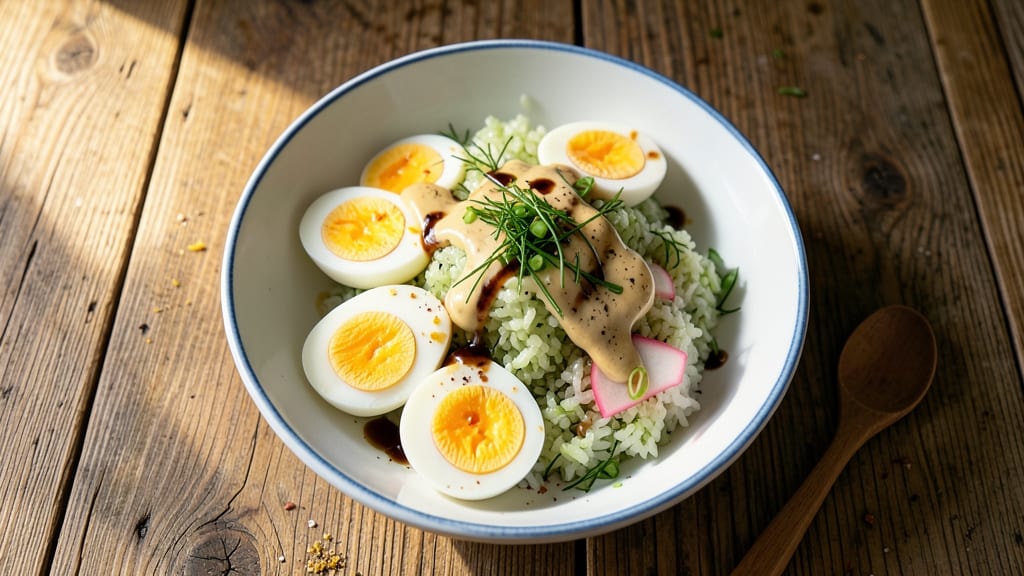
This traditional Japanese egg salad delivers the luxurious balance of silky soft-boiled yolks and creamy mayo, elevated by umami-rich soy and delicate dill. The secret lies in precise cooking—eggs poached just until yolks remain tender yet firm enough to slice cleanly, creating that signature velvety texture Japanese home cooks prize.
Every component must harmonize: the tang of rice vinegar, the depth of soy, and the subtle crunch of sesame seeds.
The preparation begins with the eggs, which are gently poached in simmering water with a touch of salt—never boiling, as that risks overcooking the delicate yolks. Once cooled, they’re carefully sliced into quarters, their centers left intact to preserve that molten luxury.
The dressing combines Japanese mayo, a splash of mirin for brightness, and just enough dill to bridge Western and Eastern flavors without overpowering the eggs’ natural richness.
What makes this salad truly special is its texture contrast: the firm yet tender egg whites provide structure, while the yolks melt on the tongue, their creaminess amplified by the mayo’s velvety embrace.
Garnishes like toasted sesame seeds and thin cucumber ribbons add visual elegance and a refreshing crunch. This isn’t just a salad—it’s a celebration of Japanese precision in everyday cooking, where simplicity becomes sophistication.
Perfect for bento boxes, light lunches, or elegant gatherings, this recipe serves as both a vegetarian centerpiece and a gateway to Japanese home-style flavors. The method scales effortlessly, making it ideal for meal prep or last-minute entertaining. Let’s create this dish that bridges tradition and modern convenience.
Ingredients for traditional japanese egg salad
Eight essential ingredients transform simple eggs into a luxurious Japanese salad with velvety texture and umami depth.
| Ingredient | Amount | Notes |
|---|---|---|
| Large Eggs 🥚 | 8 whole | Fresh, organic preferred for richness |
| Japanese Mayo 🍯 | ½ cup | Kewpie brand recommended for authenticity |
| Rice Vinegar 🍶 | 2 tbsp | Seasoned preferred for subtle sweetness |
| Soy Sauce 🍶 | 1 tbsp | Light or regular, not reduced |
| Mirin 🍶 | 1 tbsp | Sweet cooking wine, not imitation |
| Fresh Dill 🌿 | ¼ cup | Finely chopped, stems removed |
| Toasted Sesame Seeds 🌰 | 1 tbsp | White or black, lightly toasted |
| English Cucumber 🥒 | ½ whole | Seeded and thinly sliced |
| Diamond Crystal Kosher Salt 🧂 | ½ tsp | For poaching water |
| Granulated Sugar 🍚 | 1 tsp | Dissolved in vinegar for balance |
| Extra-Virgin Olive Oil 🫒 | 1 tbsp | For drizzling on cucumber |
| Ice Water 💧 | 1 cup | For immediate egg cooling |
The eggs are the foundation—fresh, organic eggs from pasture-raised hens yield the richest yolks. For poaching, use a stainless steel pot to maintain even heat, and never let the water boil vigorously, which risks overcooking. Kewpie Japanese mayo is non-negotiable for that signature tangy-sweet balance, though Hellmann's in a pinch works. Mirin adds the delicate sweetness that bridges traditional and modern palates—avoid the imitation versions with added sugar. For the vinegar, seasoned rice vinegar (like Kikkoman) contains a touch of salt, eliminating the need for additional seasoning in the dressing.
No Japanese mayo? Substitute with a 1:1 ratio of vegan mayo plus 1 tsp rice vinegar for tang. Fresh dill is ideal, but dried dill at one-third the amount works in a bind—just crush it between your palms to release the oils. For the cucumber, English cucumbers have fewer seeds, but any seedless variety will do. The sesame seeds must be toasted—heat them in a dry pan over medium until golden and fragrant. Mirin shortages? Swap with 1 tbsp honey plus 1 tsp lemon juice, though the flavor profile shifts slightly. The dressing can be made up to 2 days ahead and stored in an airtight container.
Poached eggs keep best in the fridge for 2 days if submerged in ice water immediately after cooking. The dressing separates if stored too long—stir vigorously before serving. For meal prep, slice the cucumber and store it separately until ready to assemble. Sesame seeds lose their aroma over time, so toast fresh before garnishing. This salad holds well for 3 days in the fridge, though the texture becomes slightly softer. For a make-ahead option, poach and peel the eggs, then refrigerate them whole until ready to slice—this preserves their shape and prevents overcooking.
Why You'll Love This Recipe
- Five-Ingredient Magic: I swear by this list—eggs, mayo, vinegar, soy, mirin—and that’s it. No chopping, no peeling (just soft-boil the eggs), and the dressing comes together while you’re still waiting for the water to boil.
- Umami Bomb: That combo of soy sauce and mirin? It’s like a flavor grenade in the best way—salty, sweet, and just a little funky. The Japanese mayo ties it all together with that signature creamy richness you can’t get anywhere else.
- Lunchbox Hero: Between us, this is my go-to for bento boxes or work lunches. Pack it in rice balls, spread it on toast, or eat it straight—it holds up for days and still tastes fresh. (Yes, even on a Tuesday night.)
- Budget Win: Eggs are cheap, rice vinegar lasts forever, and a jar of Japanese mayo goes a long way. I make this for a week’s worth of meals without breaking the bank, and it’s still better than anything store-bought.
Step-by-step instructions for traditional Japanese egg salad
Master this delicate balance of textures and flavors—creamy yolks, bright vinegar, and fresh herbs.
Prepare the Soft-Boiled Eggs
Place the 8 whole large eggs in a saucepan and cover them completely with cold water. Add the 0.5 teaspoon Diamond Crystal kosher salt to the water. Bring to a gentle boil over medium heat, then immediately reduce to a simmer. Cook for exactly 6 minutes and 30 seconds—this creates a perfectly set but still creamy yolk. The water should remain at a gentle simmer, not a rolling boil, to prevent cracking.
While the eggs cook, prepare the ice water in a large bowl. When the timer goes off, transfer the eggs to the ice water for 2 minutes to stop the cooking process completely. This shock treatment preserves the yolk's silky texture. Gently tap each egg on a hard surface to crack the shell all over, then peel under cool running water for easier removal. The eggs should be completely peeled and ready for the next step.
Create the Dressing
In a small bowl, whisk together the 0.5 cup Japanese mayo, 2 tablespoons rice vinegar, 1 tablespoon soy sauce, 1 tablespoon mirin, and 1 teaspoon granulated sugar dissolved in a small amount of water. The sugar should dissolve completely to create a smooth, balanced dressing. Taste and adjust the seasoning—you want a harmonious blend of sweet, tangy, and umami flavors without any single element overpowering.
Add the 0.25 cup finely chopped fresh dill to the dressing and stir gently to distribute the herbs evenly. The dill should be finely minced to prevent any large pieces from disrupting the salad's texture. Set the dressing aside while you prepare the cucumber—it needs to sit for a few minutes to allow the flavors to meld.
Prepare the Cucumber Base
Slice the 0.5 whole English cucumber thinly using a mandoline or sharp knife, removing the seeds carefully. Arrange the cucumber slices on a plate and drizzle with the 1 tablespoon extra-virgin olive oil. The oil should coat the cucumber lightly, enhancing its natural freshness without making it soggy. Sprinkle with the 1 tablespoon toasted sesame seeds, pressing them gently into the cucumber slices so they adhere.
This layer forms the foundation of your salad, providing a crisp, refreshing contrast to the rich egg mixture. The cucumber should be arranged neatly but not overly crowded—you want each slice to be visible and accessible when serving. Set this aside while you prepare the egg mixture.
Combine the Eggs and Dressing
Gently place the peeled eggs into a medium bowl, being careful not to break the yolks. Add the prepared dressing and fold everything together using a rubber spatula. Start with the whites and gradually incorporate the yolks to avoid overmixing, which can turn the yolks grainy. The mixture should be creamy but still hold its shape when spooned.
Taste the egg mixture and adjust the seasoning if needed—you might need a touch more soy sauce for saltiness or a splash of rice vinegar for brightness. The final texture should be smooth, with the yolks maintaining their velvety consistency. This is where the traditional Japanese technique shines—the delicate balance of flavors and textures.
Assemble and Serve
Spoon the egg mixture over the cucumber base, spreading it evenly to cover the cucumber slices completely. Garnish with additional toasted sesame seeds and a few sprigs of fresh dill for presentation. The salad should look vibrant, with the creamy egg mixture contrasting beautifully against the green cucumber and golden sesame seeds.
Serve immediately while the eggs are still at room temperature for the best texture. This traditional Japanese egg salad delivers a luxurious combination of textures—creamy yolks, crisp cucumber, and delicate herbs—all balanced by the tangy, umami dressing. Each bite should be a harmonious blend of rich and refreshing flavors, perfectly capturing the essence of Japanese home cooking.
Pro Tips For Making Traditional Japanese Egg Salad
- CHILL THE EGGS FIRST: Pop those eggs into ice water for 10 minutes before peeling—cold yolks hold their shape like glue, so your salad stays creamy instead of turning into a runny mess. I learned this the hard way when my first batch turned into a sad, greasy puddle.
- USE COLD MAYO: Refrigerate your Japanese mayo for at least 30 minutes before mixing—room-temperature mayo makes the salad greasy and heavy. Cold mayo binds better with the eggs and keeps the texture light, just like it does in the bento boxes you’ve seen.
- SWEAT THE SOY SAUCE: Warm the soy sauce and mirin together for 30 seconds in a microwave (just until steaming)—this cuts the sharpness and lets the flavors meld. Skipping this step leaves the salad tasting flat and salty instead of balanced.
- PEEL EGGS UNDER RUNNING WATER: Crack eggs gently, then hold them under cold running water while peeling—it removes the membrane cleanly without breaking yolks. This isn’t the prettiest method, but it’s the tastiest, and you’ll save time scrubbing bits out of your bowl.
Pro cooking tips for this recipe
Egg Cooking Precision
The key to perfect eggs lies in temperature control—never let the water boil vigorously, as this risks cracking or overcooking. I use a stainless steel pot (like All-Clad) to maintain even heat distribution. The water should gently simmer with tiny bubbles breaking the surface, not a rolling boil.
For 6 minutes 30 seconds, set a timer and resist the urge to peek—the eggs will release steam, which is normal. 🌡️
After cooking, the ice water bath is non-negotiable. I prepare a large bowl of ice water with 1 cup ice cubes and 1 cup cold water to ensure rapid cooling. The eggs should sit for exactly 2 minutes—this stops all cooking and preserves that molten yolk center.
For peeling, I tap the eggs gently on a hard surface, then roll them under cool running water while peeling. This prevents the whites from sticking to the shells.
Dressing Balance
The dressing must harmonize sweet, salty, and tangy flavors without overpowering the eggs. I whisk the Japanese mayo (Kewpie brand) with 2 tbsp rice vinegar first to emulsify, then add the 1 tbsp soy sauce and 1 tbsp mirin.
The sugar should dissolve completely—use a small amount of warm water if needed. Taste as you go: if it’s too sweet, add a pinch of salt; if too sharp, a splash of mirin. 🍶
Fresh dill is essential—dried won’t provide the same brightness. I chop it finely with kitchen shears, then press it between my palms to release the oils before adding to the dressing.
Let the dressing sit for 5 minutes before using; this allows the flavors to meld and the mayo to fully emulsify. If the dressing separates later, simply whisk vigorously before using.
Texture Mastery
When combining the eggs and dressing, gently fold with a rubber spatula to avoid breaking the yolks. Start with the egg whites first, then gradually incorporate the yolks in the last 10 strokes. Overmixing turns yolks grainy—this is the #1 mistake I see.
The final texture should be creamy yet structured, holding its shape when spooned. If it’s too loose, chill for 10 minutes to thicken slightly. ✨
For the cucumber base, use a mandoline (like OXO Good Grips) for even slices. Drizzle with olive oil and press sesame seeds into the cucumber while still damp—they’ll adhere better.
Arrange slices in a single layer** to prevent sogginess. The contrast between crisp cucumber and creamy eggs is what makes this salad shine.
Nutrition facts
Frequently asked questions
Why do Japanese egg salads use soft-boiled eggs instead of hard-boiled?
The key is preserving that luxurious yolk texture—soft-boiled eggs create a velvety center that melts in your mouth while still holding structure. Hard-boiling makes yolks rubbery, losing that signature Japanese tamago no nitsume elegance. The 6 minutes 30 seconds cook time gives you perfectly set whites with a creamy yolk that's just firm enough to slice cleanly.
Can I make this salad ahead of time?
Yes, but with a few adjustments! Prepare the dressing and cucumber base up to 2 days ahead and store separately. For the eggs, poach and peel them, then refrigerate whole until ready to slice—this prevents overcooking. Keep the dressing chilled and whisk before using. The salad itself should be assembled just before serving to maintain the crisp cucumber texture and creamy egg consistency.
What's the best way to substitute Japanese mayo?
For authentic flavor, use Kewpie mayo—its slightly tangy profile is essential. In a pinch, mix 1 cup regular vegan mayo with 1 tablespoon rice vinegar and ½ teaspoon sugar to mimic the balance. For a richer texture, add 1 teaspoon neutral oil (like canola) to the mayo mixture. Remember, the mayo should complement the eggs, not overpower them.
How do I fix broken yolks when mixing?
Don't worry—broken yolks just need gentle handling! Fold them in last with minimal mixing to avoid creating a grainy texture. If you've already overmixed, chill the salad for 10 minutes to help the yolks re-emulsify slightly. For presentation, arrange whole yolk quarters on top before serving to showcase that luxurious center.
Is this salad suitable for bento boxes?
This makes an excellent bento component. Pack the egg mixture in an airtight container with parchment paper between layers to prevent sticking. Store cucumber slices separately in a small container with a paper towel to maintain crispness. Assemble just before eating to preserve textures. The salad keeps well for 2 days in the fridge, making it perfect for meal prep.